Pages

Showing posts with label Objectivity. Show all posts

Monday, 2 May 2016

Teaching Trigger Warnings

Image: wikimedia commons


Trigger warning: this post will contain some upsetting descriptions of other people's life experiences.

That's one sentence- are you going to stop reading? There's been a bit of scrapping on Twitter and elsewhere recently about using trigger warnings in university teaching. One academic I deeply respect argued convincingly that she does not and will not use them in her practice: she sees them as alienating students from the realities of the world, and pointed out that so much of her teaching is centred on disturbing events she would need to issue a trigger warning every week.

However, looking back, I do think I should have used trigger warnings in my teaching. If and when I am lucky enough to get my hands on more innocent undergraduate minds, I will make sure to do this. And this is why.

I taught a course that was designed to blow open those first year undergraduate minds- Social and Cultural Anthropology for Archaeologists. We (my brilliant co-lecturer and I) tried hard to get everyone thinking about their own ethnocentricity- their rootedness in a particular culture - and the way this affects archaeological interpretation. By exploring both the theoretical underpinnings and fascinating case studies of social anthropology, we tried to show the infinite variety and meaning in human behaviour. I hope our students enjoyed the experience.

BUT, one lecture in particular could have been deeply distressing for some students, and I'm ashamed that I never thought of this until recently. For this week of work, we looked at sexuality, and our case study was Gilbert Herdt's work with the Sambia people of Papua New Guinea. Among the Sambia, the only way for a boy to become a man is for him to ingest semen, which he receives orally from older men. The young boys are also toughened up with beatings, and ritual nosebleedings (shown in the picture at the top). Our point (linked to Mary Weismantel's brilliant paper on Moche pots) was that you cannot define easily what is sexual, and what is abuse. From a Sambia perspective, one could argue that Western boys are abused as they can never fully become men. There is also an uncomfortable argument to engage with about abstract concepts of morality, and respecting indigenous practice vs feeling pity for the children involved. The lecture never failed to spark debate and get people questioning themselves, which was our hope.

AND YET. What if someone in the room had been sexually abused as a child? Beaten and forced to perform fellatio? How profoundly distressing and uncomfortable the experience of learning about the Sambia would be, what dreadful memories could have been dredged up, what damage could we have done as lecturers where we had hoped to inspire?

So, in short, we needed to let students know what was coming. We needed a trigger warning. With that session in mind, I think I'll always be more aware of this in my teaching. For the sake of a single sentence, it's better to avoid a lecture with potentially disastrous consequences.

Monday, 11 April 2016

Saying stupid stuff on the Internet

Recently I've had a couple of Twitter booboos.

The first one was not too bad, I thought someone was critiqueing someone else in a sarcastic way and tried to join is as I like this person and respect their work. They were being serious. I felt like an utter tool. Luckily this person is as kind and generous as they are a good scholar and was very magnanimous about my idiocy. I resolved not to go on Twitter in the early morning when extremely tired after a night of battling Silvia.

The second time, I had no such excuse. I'd been at work here at NUIG all day, my brain was fully in gear. But I just saw a single retweet and went off like a rocket, soaring into an interpretative universe all my own. It was an RT of someone live tweeting a paper on Roman breast pumps and (having been tortured by the damn things myself) I was instantly going off into a world of experiential archaeology, the significance of being able to effectively relieve your own engorgement pain (it is as bad as it sounds folks), the need for such relief if elite Roman women were giving their babies to wet nurses etc etc. Except that the objects in question weren't breast pumps at all, and that was the whole point of the paper. DOH!

I normally try to be quite careful about what I post online: after all, it's a reflection of me and I like to think that I'm as kind and thoughtful a human being on t'Internet as I try to be in life. When it's clear you've been an idiot, however, how can you respond?

In both cases, I've responded with apologies and corrections, tried to make myself the butt of the joke. I don't know if this is the right response. I'm still worried about both situations, about future possible idiocies. Maybe this is my David Clarke social media moment, Lucy's online archaeology's loss of innocence?

Anyway, let me know if you've got good ways to a) avoid being a fool online b) minimise the effects of that foolishness. Oh, and if you've seen me be an idiot online, tell me please.

Saturday, 30 January 2016

I said it, and I meant it

So I deleted my academia.edu account.

I've been perturbed by academia.edu for some time now. I couldn't quite put my finger on what I disliked about the site- but I think it was probably a nagging question of why embrace a series of unforced performance metrics when your life is already filled by the damn things? Sure, it's fun to see how many views a paper gets, and how many your profile gets (wow, someone in Argentina looked at my profile etc) but do you really need to know this? How much is vanity, and how much is career obsession? Are either of those two things healthy?

I still did it though. The old (and deep) fear of your career suffering as a result of not playing the game won out.

But the recent revelations that academia.edu staff have been contacting scholars and asking them to consider paying for their papers to be promoted by senior staff has revealed a lot about the site, in my eyes at least.

And, in common with lots of other scholars, I'm no longer happy to affiliate with the site. So, I've pulled my profile down.

If you want to read my work, go for it! If you want to get in touch, please do. I'd love to hear from anyone about collaboration or feedback or anything. I just don't want to have those conversations through a medium that seeks to profit from a desperate desire for career progression, and that is willing to swap endorsements for cash.


Tuesday, 2 June 2015

Boobs and bad advice

If you have Twitter, you'll have spotted the latest firestorm over some questionable career advice. A post-doc's advisor can't keep his eyes from her boobs. She should put up and shut up, apparently. Cue rage.

Science, the journal that hosted the agony aunt column, has whisked it down from the internet and popped up a statement condemning such behaviour. I would rather have the original response back. When we condemn behaviour that is inappropriate and troubling in this manner, it is hidden away. We prefer that you never experience this, so when you do we won't give you practical support and guidance to deal with it. It's a different kind of putting up and shutting up, from an even weaker position- one of denial.

Anyway, this ugly little incident got me thinking about mentors. I have been very lucky to have several good ones. My intended PhD supervisor, who head hunted me into specialising in things Etruscan and fostered my frustration with the discipline. My actual PhD supervisor, who taught me how to think, how to write, how to turn failure to success, how to live beyond academe yet enjoy what it offers. My advisor, his practicality and fine tuned bullshit sensors keeping the project together. Field school director, supporting decisions on, or rather in, the ground, backed up by a senior staff who care for each other and good archaeology, not politics and positions. Colleague and project leader, vivacious, courageous, engendering respect wherever she goes. Internal and external examiners, tough but fair, demanding the best. My boss, the best man manager around.

And not one of them looked at my tits. I am one lucky pup. Thank you all.

That brings me to my advice for the Bothered who wrote to Science. You probably have a larger support network than you think. Use it, and get recording the inappropriate behaviour. Find a mentor who will support you in taking action once you've compiled the evidence. Then move against the ogler, not alone but as a team. And know that the online scientific community is totally with you.

***it's 4:45am and I have baby sick in my hair, so apologies if this makes no sense***

Saturday, 4 January 2014

Blogging Carnival: the Good the Bad and the Nobody Loves You

Bloody ugly. That's me, if you didn't know. Photo by the fabolus Alessia Carapelli


Phew, I am getting in here by the skin of my teeth!! Very late for the Doug's Archaeology Blogging Festival post for December, and I suspect that this is going to be a bit of a naughty quickie (now now, calm down).

So, Happy New Year to you all, and what was the question again? It was to riff on a theme of the Good, the Bad and the Ugly about blogging. While I'm not sure what could be uglier (well, more disturbing) than my own mind when I thought up that joke from my Christmas post, there are a couple of points about blogging that I want to talk about based on Doug's theme.

Well, what's good? I get to talk to people I've never met, I get to share my interests with people I want to meet, and that's just the social side/PR. I think the most important benefit of blogging for me has been having the space to write about what I love (Etruscans, obviously, and Devon, and archaeology in general), and what I'm passionate about (CRAP archaeological tv, stopping sexism) in an informal and fun way. It makes my serious academic writing better by giving me the freedom to let rip, let loose and let it all hang out. So thank you for reading my probably rather repetitive drivel- it really does make a difference to how I feel about writing in everyday life, and I love being able to discuss things with y'all.

Bad- sometimes that discussion feels pretty one sided. When I started blogging, I would ask these little questions at the end of a post, trying to get people to comment and talk to me, tweet at me, anything. I love and appreciate everyone who comments on a post (maybe not the very occasional spammers/slaggers off), so it's a bit pants when nobody replies. It makes me feel like I do in the pub after a night on the gin- a little bit self-pitying and unloved, cue the phony tears and "nobody loves me" wails as my friends laugh.

And ugly? Moving on from Robin Thicke at Christmas, I want to get serious for a minute here. I am increasingly concerned about people using blogs as a medium for what my Nannie would have called plain old boasting. Yes, showcase your skills, Yes, it's great that you can do x or y, or have x or y. But that's not what a conversation should be about. Imagine how sick of you your friends would be if all you did was blather on about your publications, or how great your viva went, or how fantastic your new research project is. That shouldn't mean doom and gloom- genuine joy is a real part of life, and it's great to share. But after I wrote about my new job, in the interview for which the blog was mentioned, I had a little smug guilt trip. That's not what I'm about, showing off and being self-centred and boasty. At least, I hope it's not. Either way, I don't think blogging works without honesty- about our profession, about archaeology, about the past, about ourselves.

I really hope that doesn't come across as unkind or bitter- or worse, preachy (UGH)- as I say, I did it myself, unthinkingly. But the balance between self promotion and over exposure on social media (including blogging) really needs to be questioned, to avoid alienating peers- temporarily or permanently.

Saturday, 7 September 2013

Stones: Don't be so bloody processual!


Your days are numbered, Wheeler! That dashing moustache won't save you!

Well, do. Cos it actually gets things done.

It's been a while since I wrote a "Stones" post, so I hope you are all excited and thrilled to be about to read a chunk of archaeological theory. I know I am! In the last post on Levi-Strauss I arrived at a depressing conclusion- we can never shed our skins, our histories, our biases and preferences and take a good clear look at the past. There's not really such a thing as truth, just opinion.

Except, well, a school of archaeological theory that grew up in the late 1950s and 1960s says that there is. It's called processualism- because it uses structured, logical, sort of scientific processes to find out the most secure information possible about the past. Now, a lot of people who continue to employ this kind of archaeological theory are the people that go "Ugh. Theory is pointless- what a waste of time. It's just idiots arguing about semiotics, when they could be doing good science." But do you know what? They themselves are proponents of a this particular school of thought and way of doing things- they are evangelists for processualism as a way of thinking about the past.

But how do you apply science to archaeology, and call it theory? In a world of radiocarbon dating, intricate osteological analysis, CT scans and all that jazz (let alone the world's most exciting archaeological science, consulting the vole clock*), using new methods to interrogate the past feels second nature. But think back to the first Stones post, and the second- go outside your own head and into the late 1950s. This was a time in which the majority of archaeologists lined up rows of similar pots and called them cultures, arguing for diffusion of ideas and the steady evolution of culture. It took some bright, rebellious thinkers to break away from this kind of practice, dragging archaeology out of Victorian speculation and into the light of the scientific and technological revolution that was coming.

One of Binford's amazing drawings- the anatomy of a kill site

Chief of these young rebels (strange though it seems now) was an American called Lewis Binford. I was gutted when he died in 2011. Binford in later life was kind of a big deal- and rightly so. Because when he was a graduate student, he got very fed up very quickly with the kind of culture history being peddled as archaeology- particularly after early radiocarbon dates proved that most of this speculation was wildly inaccurate. And, unlike me and thousands of other moaning PhD students, Binford actually did something about it. He was interested in the Mousterian, a period of the Upper Paleolithic. But rather than drawing endless pieces of flint and arguing about the position of hearths, he wanted to know why these objects were made, and how they related to the people who produced them. Binford's thought was that the environment of Ice Age Europe had encouraged the creation of particular kinds of site- but how could he make this argument? By going, in 1969, to an area of North America with similar climactic conditions, and seeing how people their used tools, lived in their landscape and organised their seasonal lifestyles. The results were fantastic- assemblages and sites, seen in a similar context, suddenly made sense for the first time.  Binford's research methodology more or less changed the archaeological world. He made the connection between archaeological study and what people actually do- their behaviour, and he proved beyond doubt that sociologists and social anthropologists had a great deal to offer.

Top bloke, Lewis Binford.


Ironically, by developing a more objective approach to archaeology, and spawing the processual movement that adopted his ideas and can be found in any pub bashing poor old Ian Hodder, Binford also laid the ground for modern archaeological theory. He made it safe and acceptable for archaeologists to engage with the ideas of philosophers and thinkers from outside our world of pots, stones and bones. So in the next few Stones posts, I'm going to look at a series of sociologists, anthopologists and thinkers, all of whom have influenced archaeology- but none of whom would have had a chance without Lew Binford and his ability to get up off his arse and change the world.

Wednesday, 20 February 2013

Place: The Land of Ad Hominem

St James's Palace. Image: British Monarchy Society


This post isn't about pretty snaps of places I've been or where I live. Place posts should be about more than that. This post is about the world we live in. Not all of it, that would be impossible, and pretentious. It's about one aspect of modern society- more specifically, one aspect of the way modern society likes to argue and to comment. I suppose it is an inevitable place in which we've ended up, but I definitiely do not like it. This post has been brewing for a while, but a media/Twitter tsunami yesterday had me at the point of raging. Hopefully I've calmed down enough not to rant.

Hilary Mantel. Photo (c) The Week


So, yesterday, if you didn't already know, some remarks made by Hilary Mantel, one of the most important writers yet living, given at a lecture six days ago, were published. They commented on the hypocrisy of the press, the public interest in the monarchy and bravely considered the author's own reaction to meeting the Queen. They also made historical connections between current Royals and their (sortof) ancestors. So far, so good. What stirred up the press to outraged self-defence masked as defence-of-the-realm was a few comments on the public perception of the Duchess of Cambridge. It was very clear that these remarks were based on the way Kate is perceived, and were not comments on her personality or personal life: just her public persona. They were a central part of an argument about the continuing interest in and role of the monarchy. The attack was firmly on those who whip up that interest into obsession, with tragic consequences in very recent memory. The predators of the press did not like this exposure. Not at all. So they turned upon the author who gave the lecture, presenting her remarks as a vicious personal attack, reducing a well balanced lecture to a cat fight, and finally dragging in the author's weight and own childlessness as proof of her jealousy and vindictive nature. The Daily Mail were the first (and worst) offenders. They were quickly followed by other sections of the press, who began reporting on the media storm itself, repeating the same details over and over. Other groups, particularly on Twitter, rose to the author's defence. The PM got involved. It all got very silly, very quickly.

Some people, including the author of the Guardian's lead on the story, consider the ensuing fuss to be the result of paternal media trying to diminish a strong female voice to heap praise a conformist obedient role model. I think that they've missed the point: a man would not have got away with such a strong attack on the press either, and the gender argument would be being used against him. Male or female, the problem is that it has not been, and would not be, the words and argument under scrutiny. Instead, it is the speaker themselves. Their views, their points, their logic are all useless in the face of personal facts. Mantel is childless and overweight. In another context, David Cameron is out of touch and upper class. Ed Miliband is a champagne socialist. In yet another, more horrible context, the attacks on Mary Beard a few weeks ago were shameless examples of this, as are almost all works of internet trolls. The same phenomenon lies behind comments on the horrific events surrounding the death of Reeva Steenkamp: her beauty and the combination of disability and fame in the person who killed her have become central to reporting of the case, even though they are irrelevant to the arguments about what happened that night. It has become the person, and not the argument, which is under scrutiny. You hear this every day- try getting through half an hour of the Today programme without hearing this tactic employed. You will see it in the newspapers, see it on the TV, see it everywhere that debate takes place. It has filtered down to become everyday usage. And this is shocking.

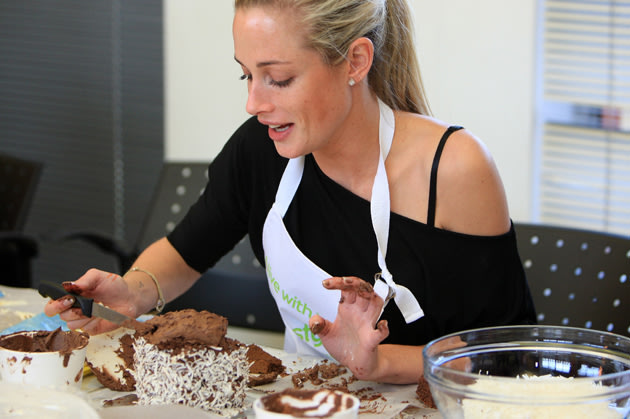
Reeva Steenkamp. Image: Yahoo.

It is shocking because the use of a person's opinions, social position and identity against the logic of an argument is one of the most classic fallacies identified by critical thinking. It's known as "ad hominem"- taking a debate "to the man." The point is that it doesn't matter who the speaker is or what they believe- the cold hard logic of their case is what counts towards the strength or weakness of their argument. In the rush of post-structural desires to recognise biases, to be aware of our own subjectivity, to recognise the potential for prejudice, we have forgotten the centrality of logic to argument, the need to be critical, impersonal. Many of the people who were so offended by the attack on Mantel are those who have contributed most to the creation of this atmosphere of hyper-subjectivity. We have collectively made a world in which ad hominem attack is the norm. Now we have to live with it.