Pages

Showing posts with label Teaching. Show all posts

Monday, 2 May 2016

Teaching Trigger Warnings

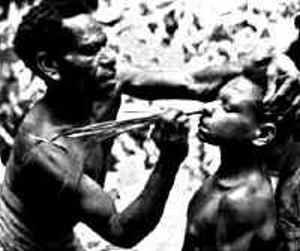
Image: wikimedia commons


Trigger warning: this post will contain some upsetting descriptions of other people's life experiences.

That's one sentence- are you going to stop reading? There's been a bit of scrapping on Twitter and elsewhere recently about using trigger warnings in university teaching. One academic I deeply respect argued convincingly that she does not and will not use them in her practice: she sees them as alienating students from the realities of the world, and pointed out that so much of her teaching is centred on disturbing events she would need to issue a trigger warning every week.

However, looking back, I do think I should have used trigger warnings in my teaching. If and when I am lucky enough to get my hands on more innocent undergraduate minds, I will make sure to do this. And this is why.

I taught a course that was designed to blow open those first year undergraduate minds- Social and Cultural Anthropology for Archaeologists. We (my brilliant co-lecturer and I) tried hard to get everyone thinking about their own ethnocentricity- their rootedness in a particular culture - and the way this affects archaeological interpretation. By exploring both the theoretical underpinnings and fascinating case studies of social anthropology, we tried to show the infinite variety and meaning in human behaviour. I hope our students enjoyed the experience.

BUT, one lecture in particular could have been deeply distressing for some students, and I'm ashamed that I never thought of this until recently. For this week of work, we looked at sexuality, and our case study was Gilbert Herdt's work with the Sambia people of Papua New Guinea. Among the Sambia, the only way for a boy to become a man is for him to ingest semen, which he receives orally from older men. The young boys are also toughened up with beatings, and ritual nosebleedings (shown in the picture at the top). Our point (linked to Mary Weismantel's brilliant paper on Moche pots) was that you cannot define easily what is sexual, and what is abuse. From a Sambia perspective, one could argue that Western boys are abused as they can never fully become men. There is also an uncomfortable argument to engage with about abstract concepts of morality, and respecting indigenous practice vs feeling pity for the children involved. The lecture never failed to spark debate and get people questioning themselves, which was our hope.

AND YET. What if someone in the room had been sexually abused as a child? Beaten and forced to perform fellatio? How profoundly distressing and uncomfortable the experience of learning about the Sambia would be, what dreadful memories could have been dredged up, what damage could we have done as lecturers where we had hoped to inspire?

So, in short, we needed to let students know what was coming. We needed a trigger warning. With that session in mind, I think I'll always be more aware of this in my teaching. For the sake of a single sentence, it's better to avoid a lecture with potentially disastrous consequences.

Tuesday, 18 February 2014

#FreeArchaeology and the University

This is a post that takes up a topic that I’ve blogged about before in a different context. #FreeArchaeology was a discussion of internships, work experience and the exploitation of willing (read desperate) junior professionals in search of financially and personally rewarding labour. Today, though, I spotted a new take on the debate, written by the fabolus Doug over at Doug’s Archaeology. With terrifyingly good self-produced statistics on just how productive one could be with access to a good library, and some assessment on time spent on field projects, his conclusions were that University archaeology is at least a variant of #FreeArchaeology- if not worse, as you’re actually paying for the pleasure, or for the bit of paper at the end.

After 8 years in one institution (it wasn’t an HMP, I promise), and heading out of academia with (for now, anyway) no regrets about sliding away into a different industry, I was feeling pretty reflective about the place of universities anyway. I’ve taught a lot of (mostly lovely) undergraduates, I’ve been part of the system, I’ve taught on field schools, I’ve got some pretty strong feelings about Higher Education and its role in archaeology. So I thought I might air them in response to the University #UnfreeArchaeology issue. They’re still pretty tangled, so I beg your patience.

Much of what Doug said I agree with. You can learn at least as much (factually, at least) on your own than you would at University- probably more, because you won’t be distracted by friends wanting you to have fun, taking up dumb new sports and hurting yourself, and carefully stalking and trapping your future life partner. His point about libraries is a particularly important one- the decline of the University of Southampton library is one of the great tragedies I saw unfold over my time there. Real books were shunted to one side, new books were ignored in favour of paying for giant screens, food and drink were allowed everywhere except the reserve collection, and slowly but surely even online journal subscriptions that you’d think were pretty essential (e.g. “Journal of Archaeological Method and Theory”) were dropped. The library steadily became, not a place for learning, but a nursery for people on the edge of adulthood, where the base textbooks lived, some funky specialist examples hung on, but mostly where people went to revise from their own scribbled notes and fanny around on Facebook. So, if you want a library, don’t bother with your average University one. I spent more time just driving to Oxford to use their library than I did in Southampton library.

Fieldwork training, too, was sketchy at best. The university approved field school began with me being assigned a 1x1 square in an open trench and left to get on with it. When I compare that with the careful training and monitoring that the field school I now work on it makes me shudder. You would probably be better off doing an unpaid internship for a year in a commercial archaeology firm than floundering in a world of strange pottery forms of which you knew nothing at the age of 18. It certainly doesn't prepare you for a career in actual archaeology, as several people have pointed out. The same is true of the field schools abroad that I've worked on- they are not the same as consistent, day in day out work in rainy Britain, learning the skills that are relevant to the actual place where you’ll be working.


However, what a good university should give you is the most important facet in being a good archaeologist- the ability to question yourself. The ability to change your opinion in the face of evidence. Seminars, discussion, (enforced) peer-to-peer debate. A good university should give you the chance to find out what you believed about the past was flawed, maybe that what you still believe is flawed- and why you continue to believe it anyway. Not developing single-mindedly, trawling in dogmatic fashion through only the authors you like or agree with, but reading those you don’t, understanding why, respecting their beliefs. Learning to be a reasoning adult, not a troll or a teenager trapped in perpetual sulks. That’s the most valuable thing that came out of University for me. And I don’t think (very sadly) most people can get it for free.

Wednesday, 29 May 2013

Pots: Last Year Presentation

Last week, I performed one of the rituals of a University of Southampton archaeology student for the last time- as it's an everyday kind of ritual, I've decided to whack it in as a "Pots" post. At the end of each academic year, all doctoral students are required to present their work to the research community at large- which usually means a mixture of keen MA students dreaming of doing this very thing next year, staff being supportive (and hiding from their exam marking for a sweet hour), and of course other PhD students, anxiously waiting to bring their research out to play. In the first year of PhD study presenting at this conference is dressed up as your "First Year Presentation" and is made to look quite scary- cue a huddle of nervous first year PhDs worrying that all they can present is a plan and a literature review because that's as far as they've got. If you're reading this, first year presenters, let me tell you now that that is just fine- nobody is expecting you to have done any more- it's just about being able to stand up, face the room and set out your stall. At the other end of the scale, you have the old farts like me- been around the department for so long (8 years of my life, from 18 to 26) that the staff are already rolling eyes at each other when you meander up to the podium.

Now, I love presentations. I suspect this is mostly because, deep down, I love an opportunity to show off a little bit. However, this wasn't always true- in my undergraduate degree I hated presenting. It made me nervous, slightly sick to the stomach. I made all the classic cockups- too much text on slides, talking too fast, not making eye contact with anyone, like a very guilty puppy who's left a present under the dining room table. So I thought I'd blog a bit about presenting- what I've learned over the four years of PhD about what makes a good presentation. Normally I don't try to be an "academic skills" type of blogger, but hey- I may well have something to add to this problem, in amongst all the bittersweet nostalgia of winding down to finishing my doctorate. No point being soppy if you aren't going to be useful. So, here are my top tips for a good presentation (that you might not have heard before):

1) Don't take yourself or your work too seriously. This is my secret. Of course your research is super important to you. Of course you don't want anyone to think you're a chump up there. If you are presenting to a superstar audience who really know their stuff, it can be intimidating. If you are presenting to any audience at all, it can be nervewracking. You need to nip this in the bud, fast- or you will give in to the temptation to drain all personality out of your presentation, playing it so safe you might as well be wearing a lifejacket and blowing a whistle. If you drone on until the allotted time is done, not smiling, not looking up, grim and relentless in your dissemination of knowledge, all your audience will take away from your presentation is how bored they were. Look around the room- the death grip on your notes won't save you if you haven't done the work. You're here- all these people are interested in you- because you're bloody interesting. Now show it. Give the crowd what they want- fantastic archaeology (or whatever) presented with a smile. If you stuff up, who cares? Everyone's been there. Better to be engaging and accidentally skip two slides on than bore the pants off everyone and stick relentlessly to the plan.

2) Write as you speak. While this is probably true for most short forms of academic work, it is vital in a presentation. I know fantastic speakers who can do a 15-20 minute paper without a script. Good for them. For me, scriptless presenting is for 30 minutes plus- anything less and I need a plan to get everything I want to say out there in the time limit. When writing up a presentation paper, I think of around 150 words per minute I'm speaking. So, for 20 minutes that works out at about 3000 words. Every one of those words should be phrased and styled as if the script does not exist at all. Sentence construction is key here- when I'm writing I can get bogged down in sub-clauses- when I'm speaking that does not happen. The little one-liners I like to throw in in conferences are written in my script, as are the more serious moments when the tone changes. It's all there- like a play, you should be able to write your audience's general reaction. Of course, an academic presentation can't all be fun and games, but it should feel natural, warm and enthusiastic- exactly how you sound when yackking about your research to your colleagues, friends and long suffering partner. Note- this ruthless word-planning should also stop you committing the cardinal sin of presentations- going over your allotted time.

3) Posh slide presentations are all very well, but it's what you say that counts. I have seen some beautiful slide shows in my time- gorgeously put together treats of powerpoint, swirling and whirling around the screen as they zoom in and out of view. These presentations (even if they don't make you feel sick from all the movement- honestly, it's like being in one of those flight simulators sometimes), no matter how lovely they are, are less important than the words the presenter is speaking. They can even be distracting. If everyone is absorbed in watching your text spring onto the slide in a super flashy font, they aren't listening to you divulge your wonderfully original re-interpretation of Levi Strauss/Maiden Castle/Garibaldi's March on Rome.

4) Enshrined in the previous three hints- keep it simple. Don't try and do too much. A little bit of text, mostly pictures in terms of your slide show. Personality and warmth, minimal jargon in your spoken paper. The images, especially charts of results, do a lot of the work for you- all you have to do is bring them to life. These rules apply whoever your audience are- bigwigs, fellow students, the raggle taggle of the research community. They'll be eating out of your hand if your research is good and you can present it simply and clearly, like a human being, not a robot.

I hope these rough and ready tips are of some use to somebody- do you have any other thoughts on what makes a good presentation? Has anyone got any horror stories to tell? I realise that I don't deal too much with nerves here- basically, I think they can be useful as long as they are under control. The only way (in my book) to get nerves under control is to practice, and have faith in the four previous principles to carry you through. Does anyone have any more constructive advice? I'm off to work, incorporating my advisor's comments into my PhD draft. Wish me luck!
Tuesday, 14 May 2013

Stone: Let's talk about Theory, baby

First off, apologies for not blogging for the last couple of weeks- I've been working pretty hard to finish the second draft of my PhD thesis. It's done now, sent off to my supervisor and advisor for their thoughts, and hopefully will soon be transformed into the final version. Phew! So I'm back blogging, and, looking at the loose cycle of Pots-Places-Stones-Bones, I realised that this post needed to be a Stone post. In the past, I seem to have used these posts for a bit of a whinge, a bit of a gripe. Sometimes (I hope mostly) those moans are constructive and about relevant topics that need to be questioned. However, I want to do something a bit more productive with these posts over the next couple of months.

You may not think that talking about archaeological theory is productive. When I was an undergraduate, there was a strong feeling that theory was "dead" and was a surplus requirement to the practical business of digging things up. I'm not sure if the proponents of this idea (who were many, and who were vocal), were responding to an internalisation of theory, or were just being mischievous. Either way, when a member of academic staff starts your "Introduction to Archaeological Theory" module with a soothing (read patronising) little monologue on how "theory is tough" and "it's ok not to understand," the chance to change those people's views went down the toilet.

So here's what I think. Theory isn't tough. Sometimes the language that the people writing it use is tough, obscure, downright daft. But theory is about ideas, and the ideas are usually devastating- because they are, at their heart, relatively simple. When I taught an undergraduate module with a good friend on "Introduction to Social and Cultural Anthropology," because we were theorists, we filled the course with it. Students lapped it up- we got stellar feedback ratings. Because you don't teach theory by whinging on about how tough it is- you make the IDEA clear, you find a fabulous pair of case studies that illustrate the point (usually one ethnographic and one archaeological for our purposes) and then you make the students apply the theory, go back to the original work and demolish the crap presentation to get at the central concept.

Because (and drum roll here please) you are applying theory all the time. ALL THE TIME. Theory is alive and well, because you are using it. You can't wipe your head clean, you can't empty out your mind. This is what Ian Hodder was talking about all those years ago about "theory at the trowel's edge," a phrase that's often smirked at. Every time you pick up a trowel, every time you read a source, every time you trawl through a museum store, you are doing something pretty special. You are simultaneously combining preconceived opinions and physical evidence to make a new idea. You can't turn off that process- that's what we're in it for. Even if you're watching archaeology on telly, you are still doing this. You are theorising- having and making ideas about material culture. That's archaeological theory.

So, if you are going to do this all the time, it seems like a pretty good idea to organise those ideas. To find out who thought of them first, and how their thoughts differed to yours. To discover the flaws in your own arguments and be able to make them (harder) better (faster, stronger). To find new ideas that are exciting, that transform your thoughts about objects, words or people. That's what learning archaeological theory is for, and, taught correctly in fully contextual and applied manner, it's f***ing brilliant.

So, over the next lot of Stone posts, instead of faux-positive whining about how I can't get a job*, I want to talk about the big ideas in theory. The thinkers, the case studies, that have changed how I approach objects in my professional life, and most of my actual life. Once you're familiar with these arguments, which aren't just about archaeology but about people, you see them everywhere- you can bust them if they're rubbish, or use them if they work for you. BUT YOU HAVE TO KNOW THEM FIRST! To make up for my absence, there will be two posts this week- probably tomorrow I'll be back, and I want to start (almost) at the beginning of archaeological theory.

See you tomorrow for some cultural Darwinism.

Don't look so worried Charles! It's just some ideas!


*Although you never know- as a colleague and I discussed on Twitter, I think a BBC4 series on theory in anthropology/archaeology could actually be pretty damn good: thinkers, ideas and case studies every week. Like the recent Richard Miles doc on the history of archaeology, which was well presented and fun and accurate- the Holy Grail. If you're reading this, O Hallowed Producers, give me a shout.

Monday, 10 December 2012

Stones: Teaching

I feel a bit rotten putting a post about teaching into the "Stones" tag list for this blog- it's not really a grumble or groan subject for me, to be honest. Teaching is one of my favourite aspects of academia- I can honestly say that in spite of having put in some horrendous essay marking time over the years of my PhD, teaching students is my favourite part of the week. I love the moments when suddenly, someone gets the hang of a big concept, or becomes confident enough to make links between their own archaeological interests and scary looking theory. When someone makes a really strong point in class, or in an essay, I want to leap in the air and dance and hug them. (I don't, of course- it's strictly non toccare with students, and I don't want them to think I'm nuts). I feel the same way about teaching outside the classroom- when I supervise my trench workers I am delighted when they work out pottery from rocks, or spot a piece of iron slag, or bring me a teeny bronze fragment smaller than their fingernail- that glow of achievement, that pride in doing something really well- it works both ways. I get some of my best ideas for research from teaching- and I stand by the idea that you only really understand something if you can teach it coherently to an undergraduate class, or better yet, a school class.

Some beautiful British stones...

So, when there was a bit of a hoo-ha around Twitter, and a kerfuffle on the Today programme about teaching history in schools, I did get grumbly. I did get ranty. I shouted at the radio and huffed and puffed around the house. Basically, the debate is that Michael Gove wants to make British history the focus of school history syllabi, while his opponents think that this will create an inward looking nationalist curriculum. Both groups have a point- British history is intensely relevant to living in Britain today- but it is USELESS to work on British history without its wider, global context. There is no argument to be had here, and the dichotomy is, frankly, stupid. Its existence illustrates the real problem inherent in both views- that students are being taught to know things, and not to use them. Whether this is old fashioned knowledge of dates and kings, or new types of knowledge about skills for historical analysis, or causes for events, the system rewards knowledge. Knowing what you need to know gets you through the exam. Independent thought is not required. Gove seems to want everyone to know (for example) the dates of a particular event, while exam boards want students to know the "key causes" of particular moments, broken down into a format that can be fed into a 6-mark GCSE question. Neither party think of the student in all of this: they are a drone, to be fed knowledge and prove that they have absorbed this knowledge by regurgitating it onto an exam paper. It makes me want to vomit myself.

What I would love to do is get university style teaching into schools. Give students the primary sources and objects, and get them to see historical events in context. For example- a good old nationally relevant event like the Dissolution of the Monasteries. You can't understand that (very British) phenomenon without a grasp of European politics at the time. You need to know about the Spanish Empire and Martin Luther, Erasmus and the knock-on effect of the Renaissance on religious philosophy, Henry VIII's relationship with France and the history of Anglo-French relationships. You need to recognise the motivations of English protestants who became star ministers- Cranmer, Cromwell. It's not just about Henry VIII getting off with Anne Boleyn, but the entire world of circumstance that made their world as it was. Breaking down the influences and discussing them together- encouraging students to talk about their primary opinions- setting reading for homework- then re-engaging to get a considered view of their ideas. Helping them put together the tools for an argument. Teaching them to see the world in context, and then argue coherently in an essay, not make a 6 mark list of causes. The exams would have to change too- more open ended discussion questions, focused on demonstrating the ability of the student to make an argument, rather than recite a list, whether of dates or "impacts."

My entire goal as a university teacher is to give my students the skills to think for themselves and trust their own judgements- giving them raw information and the tools to process it through reading/listening and then discussion. When I teach first year students, they are horrified by the concept of originality- many don't have the confidence to think for themselves, they are too used to repeating back knowledge, and doing this will still carry them through to a 2:2 or a low 2:1 if done well. But by the end of the course, they are making connections themselves- going off and doing independent research into things that interest them, then bringing their ideas and case studies back to me. This is exactly the same principle as teaching in an archeological field school- I show my students how to identify their finds, then encourage them to speculate as to what they mean for the archaeology of the trench, getting them to put together an interpretive argument. In the age of the internet, shouldn't we be able to use the same teaching methods as this younger and younger? Encouraging not only independent learning, but independent thinking? It doesn't matter if the focus is British history in schools- if taught in this way, it will connect the student to an inter-connected past, and a world of interesting influences on Britain will be brought in as a matter of course. If narrow, traditional teaching practices continue, islands of knowledge, whether about Britain or not, will continue to restrict and restrain the schoolchildren of another generation.


This post is still a "Stones" post- the issues that I've talked about here will surely not be to everyone's taste- there is no simple answer to the best way to teach. It's bloody hard to know what is right. But I know what works- and I know what my students enjoy. I'd rather be challenged and pushed to think for myself than bleated at and bored stupid- no matter how hard it is. Anyone who thinks students aren't bright enough to try independent thinking just hasn't tried hard enough- it's often a real sod to get that first breakthrough. But if we give up, we let them all down, and we let the difficulty of active teaching swamp the potential of our students and our own joy in teaching them. I'll stop ranting now, but I'd love to know- positively or negatively- what you think about this debate. Do you teach too? What do you think of independent learning in schools or in universities?

The shut door to knowledge?
Disclaimer: I know LOADS of good teachers who DO encourage their students to think for themselves- I am NOT having a go at you. I just wish the system was designed to encourage this and the great work you all do.