Recently I've had a couple of Twitter booboos.
The first one was not too bad, I thought someone was critiqueing someone else in a sarcastic way and tried to join is as I like this person and respect their work. They were being serious. I felt like an utter tool. Luckily this person is as kind and generous as they are a good scholar and was very magnanimous about my idiocy. I resolved not to go on Twitter in the early morning when extremely tired after a night of battling Silvia.
The second time, I had no such excuse. I'd been at work here at NUIG all day, my brain was fully in gear. But I just saw a single retweet and went off like a rocket, soaring into an interpretative universe all my own. It was an RT of someone live tweeting a paper on Roman breast pumps and (having been tortured by the damn things myself) I was instantly going off into a world of experiential archaeology, the significance of being able to effectively relieve your own engorgement pain (it is as bad as it sounds folks), the need for such relief if elite Roman women were giving their babies to wet nurses etc etc. Except that the objects in question weren't breast pumps at all, and that was the whole point of the paper. DOH!
I normally try to be quite careful about what I post online: after all, it's a reflection of me and I like to think that I'm as kind and thoughtful a human being on t'Internet as I try to be in life. When it's clear you've been an idiot, however, how can you respond?
In both cases, I've responded with apologies and corrections, tried to make myself the butt of the joke. I don't know if this is the right response. I'm still worried about both situations, about future possible idiocies. Maybe this is my David Clarke social media moment, Lucy's online archaeology's loss of innocence?
Anyway, let me know if you've got good ways to a) avoid being a fool online b) minimise the effects of that foolishness. Oh, and if you've seen me be an idiot online, tell me please.
Showing posts with label Media. Show all posts
Showing posts with label Media. Show all posts
Monday, 11 April 2016

Wednesday, 14 October 2015
Sunday Supplement Etruscans
 |
| Image (c) The Sunday Times. |
Yeah, I know. It's Wednesday, not Sunday.
But very unusually, I got my grubby mitts on a Sunday paper. We don't normally bother- pre-baby we felt like they were expensive and luxurious, so would get them very occasionally. Post-baby, we don't have time. My parents were here, and they looove their big Sunday broadsheet, so palming Silvia off on her father, I leafed through the different bits of the Sunday Times. And there, in the telly guide, was a reference to the Etruscans! Unfortunately, it was in relation to a really poor piece of archaeo-tv, a programme on the Celts that has been so comprehensively reviewed by the excellent Rachel Pope that I won't go into its faults (and there were many) here.
The TV critic, A.A. Gill, broadly shared Rachel's opinion of the Celts programme. He divined that the Celts were really a made-up people (a somewhat fair point, considering the machinations of 19th century cultural historians) and that the whole show was trying to overcompensate for that fact, cobbling together a tight historical narrative based on Roman texts, instead of exploring the complex interrelationships of these different communities across Iron Age Europe*.
But he had to go and drag the Etruscans into it, didn't he? I've recycled the damn magazine now (foolishly), but the gist was that the Celts were a made up people "like the Etruscans." Well. Well now. Who'd have thought I'd wasted so many years of my life studying a figment of the 19th century imagination, stirred up from Roman texts?
Well, big sigh of relief all round, I definitely haven't. The idea of an Etruscan people is right there in their own words. The term "Rasna" or "Rasenna" is used to refer to a collective group of central Italian communities who chose to define themselves with this word. It's thought to mean "people of the city," so the Etruscans are stating the centrality of urban living to their self-identification. It's central to who these people thought they were. It's (perhaps) what made them different from their neighbours, across the Appennines and to the south. So, Mr Gill, even if you are unhappy with stylistic attributions that stick art styles to archaeology and then to supposed ethnic groups, here is a group of ancient people who were quite happy to define themselves as different from their neighbours. Leave the Etruscans out of it, please. We have quite enough problems of our own to deal with in promoting Etruscan archaeology without everyone thinking the whole thing was made up.
In fact, help a sister out. ***Brazen publicity request/plug alert*** Can we please have a feature on the Etruscans in the Sunday Times Culture section, perhaps when my new book comes out? Let's talk.
*In a massive and simplified aside, why are we still so scared to admit that on occasion the Romans were wrong? The ever-brilliant Mary Beard (who Gill has been deeply, misogynistically unpleasant to in the past) was opining in the same Culture section of the same paper that the Romans are really terrifically overrated. And that's from a classicist! Come on people (especially commissioners of archaeological TV), let's break free of two millennia of Roman intellectual oppression. Digression over.
** In the magazine of the Sunday Times, Mr Gill was back with a review of what sounded like an atrocious and very expensive restaurant in London. He made a reference to "if Lidl did an own brand French fish soup." Mr Gill, they do- I tried it last night, and it's not half bad- tasted ok, no nasty after effects and cheap as chips. I suggest you give it a go, it was far nicer than the bouillabaisse you described forcing down in the review.
Monday, 5 October 2015
Telly Special: Questions and Queens
Secret History is back on Channel 4, and it's been a while since I blogged about archaeology on the telly, so I thought I'd share some thoughts on the first two episodes.
I want to start with last night, probably the more tricksy of the two shows so far. The hook was Cleopatra, and the film focused on the single minded quest of an amateur archaeologist to find her lost tomb. It was clear that the lady in question, Kathleen Martinez Berry, was living out her Indiana Jones fantasies, and fair play to her- through her stubborn refusal to give in, her bright optimism in the face of snubbing and snobbery (implied) and her incisive desk-based investigation, a rather exciting site is emerging from the desert sands. When you think of the hostility this woman has endured (and probably is still enduring, if social media is any guide) it is remarkable that she has kept going. Kathleen, an ex criminal lawyer, perhaps has exactly the type of thick skin you need to succeed in archaeological adversity these days. With enough money behind her, she has become a new kind of independent scholar*, steadily demonstrating that Taposiris Magna was a major Ptolemaic temple site with associated necropolis.
Of course, not everything was perfect, especially when it came to methodology. I would definitely have wanted a full Ground Penetrating Radar survey first off- rather than as a late doors attempt to find tombs. Collecting strategies also seemed unusual- there were shots of human remains being removed without being photographed in situ with scales in place (ALTHOUGH this could just have been the film's editing). If this was accurately represented, it would presumably not have happened if an experienced Egyptologist with strong documentation skills had been part of the dig from the start. What a shame.
More positively, there were so many fabulous women scholars featured. Dorothy Thompson from Cambridge presenting a papyrus fragment with Cleopatra's possible signature. Salima Ikram examining the amazing necropolis.
The first episode of the new series also featured an incredible female team- the women of the Rising Star expedition. As a claustrophobic wuss, I was in awe of their skill, strength and dedication. The entire excavation project was a lesson in public archaeology- live tweeted by director Lee Berger from above ground, (I think) webcams so you could follow the discovery as it happened. And all this from a cave deep below the South African bush. I don't know enough about human origins to assess their findings, but from a scicomm perspective this was the business.
These two programmes have raised serious key questions for me, regarding how we communicate archaeological research. Firstly, Cleopatra. The hook is the same as the worrying trend of "finding" (in)famous people in the past- Richard III anyone? Do we need personalities to pin projects on? Why is the discovery of Taposiris Magna not enough? Another key question- in an age of restricted research posts and cuts to funding, are independently wealthy amateur archaeologists going to be a permanent part of the scene? If so, how can they be welcomed and integrated, encouraged to partake in best practice without being patronised?
Secondly, and more simply, Homo Naledi and Rising Star. How the hell can a project in the middle of nowhere (relatively), metres below the surface, have better communications than excavations in the middle of European holiday hotspots (Tuscany, Greece etc)? What can we do to share our research more widely, and more accessibly? If Berger and Co can do it, then why can't we?
Field seasons for 2016 are in the planning phases now. Let's start planning how to share, as well as how to discover.
*or a reincarnation of a very old type of scholar- let's party like it's 1899.
I want to start with last night, probably the more tricksy of the two shows so far. The hook was Cleopatra, and the film focused on the single minded quest of an amateur archaeologist to find her lost tomb. It was clear that the lady in question, Kathleen Martinez Berry, was living out her Indiana Jones fantasies, and fair play to her- through her stubborn refusal to give in, her bright optimism in the face of snubbing and snobbery (implied) and her incisive desk-based investigation, a rather exciting site is emerging from the desert sands. When you think of the hostility this woman has endured (and probably is still enduring, if social media is any guide) it is remarkable that she has kept going. Kathleen, an ex criminal lawyer, perhaps has exactly the type of thick skin you need to succeed in archaeological adversity these days. With enough money behind her, she has become a new kind of independent scholar*, steadily demonstrating that Taposiris Magna was a major Ptolemaic temple site with associated necropolis.
Of course, not everything was perfect, especially when it came to methodology. I would definitely have wanted a full Ground Penetrating Radar survey first off- rather than as a late doors attempt to find tombs. Collecting strategies also seemed unusual- there were shots of human remains being removed without being photographed in situ with scales in place (ALTHOUGH this could just have been the film's editing). If this was accurately represented, it would presumably not have happened if an experienced Egyptologist with strong documentation skills had been part of the dig from the start. What a shame.
More positively, there were so many fabulous women scholars featured. Dorothy Thompson from Cambridge presenting a papyrus fragment with Cleopatra's possible signature. Salima Ikram examining the amazing necropolis.
The first episode of the new series also featured an incredible female team- the women of the Rising Star expedition. As a claustrophobic wuss, I was in awe of their skill, strength and dedication. The entire excavation project was a lesson in public archaeology- live tweeted by director Lee Berger from above ground, (I think) webcams so you could follow the discovery as it happened. And all this from a cave deep below the South African bush. I don't know enough about human origins to assess their findings, but from a scicomm perspective this was the business.
These two programmes have raised serious key questions for me, regarding how we communicate archaeological research. Firstly, Cleopatra. The hook is the same as the worrying trend of "finding" (in)famous people in the past- Richard III anyone? Do we need personalities to pin projects on? Why is the discovery of Taposiris Magna not enough? Another key question- in an age of restricted research posts and cuts to funding, are independently wealthy amateur archaeologists going to be a permanent part of the scene? If so, how can they be welcomed and integrated, encouraged to partake in best practice without being patronised?
Secondly, and more simply, Homo Naledi and Rising Star. How the hell can a project in the middle of nowhere (relatively), metres below the surface, have better communications than excavations in the middle of European holiday hotspots (Tuscany, Greece etc)? What can we do to share our research more widely, and more accessibly? If Berger and Co can do it, then why can't we?
Field seasons for 2016 are in the planning phases now. Let's start planning how to share, as well as how to discover.
*or a reincarnation of a very old type of scholar- let's party like it's 1899.
Friday, 10 January 2014
An Open Letter to Dan Snow...
Dear Dan Snow,
I hope you are well, and had a restorative Christmas with
your family. I'm really sorry to be writing what may seem like a snarky open
letter to you, particularly so soon after the season of goodwill has ended. I'm
especially sorry to be doing so after so many years of watching and enjoying
many of your programmes. I can remember loving them as a teenager, so it is
with a heavy heart that I'm writing this blog post.
What’s happened to spark this off? Well, on Wednesday night my
husband decided he wanted to watch a programme presented by you- Rome’s Lost
Empire. I was working on one side of the room, he was enthroned on the sofa. I
was happily cracking on with my work, blathering on about Etruscan pots and
checking a bibliography, when I heard these words come out of your mouth. They
may not be 100% verbatim, but I feel that the below is an accurate account of
your meaning:
“That’s what they do
in archaeology school for 3 years.”
You were referring to your disbelief that an archaeologist
could pick up a pottery fragment, and reliably date it on site. While I
appreciate that you were trying to relate how impressed you were, this really
got me going. That’s not what we do in archaeology school for 3 years. Most
archaeological experts have gained their knowledge over at least 7 years at
university, and many more years of continuing practitioner development. Most
university courses, too, are not just focused on pottery identification skills-
it’s about putting the objects you’ve learned to identify in context in the lives of the people who used them. So, in one
sentence, you brilliantly downplayed the hard work, training and years of
dedication that most archaeologists put in to get to where they are, de-valuing
their skills effortlessly. As President of the CBA, you should know better.
I was mollified shortly afterwards by the appearance on the
programme of archaeologists for whom I have the greatest respect, my doctoral
adviser, Simon Keay, among them. My head went back to chasing down that pesky Studi Etruschi article. Then I heard you
say this to one of your co-presenters, the very woman whose work on remote
sensing had led you to many of the sites in the programme and revealed so many
new features:
“Take your head out of
your computer… this is what it’s all about.”
Wow. So all those hours spent researching, poring over data,
pulling it together, working her arse off to find new sites, and then her
generosity in sharing that data with you, to say nothing of her time- it’s not
important. What’s important is to wander around in the desert gazing into the
middle distance, crashing through the dunes in a 4x4. Obviously, archaeology is
all about pretending to be a great adventurer, and not about the long hours of
research and analysis that all of us put in before sticking a trowel in the
ground. Again, you effortlessly sidelined the reality of archaeological
research, and once again, you should know better.
I know lots of people
on Twitter and elsewhere were unhappy with the production values of the
programme, but I don’t think that’s down to you at the end of the day. What you
say to camera is. So, I’d be really grateful if you could think about the
effect your comments have on public perceptions of archaeology, and how they
make us archaeologists feel.
Thank you.
Wednesday, 20 February 2013
Place: The Land of Ad Hominem
 |
| St James's Palace. Image: British Monarchy Society |
This post isn't about pretty snaps of places I've been or where I live. Place posts should be about more than that. This post is about the world we live in. Not all of it, that would be impossible, and pretentious. It's about one aspect of modern society- more specifically, one aspect of the way modern society likes to argue and to comment. I suppose it is an inevitable place in which we've ended up, but I definitiely do not like it. This post has been brewing for a while, but a media/Twitter tsunami yesterday had me at the point of raging. Hopefully I've calmed down enough not to rant.
 |
| Hilary Mantel. Photo (c) The Week |
So, yesterday, if you didn't already know, some remarks made by Hilary Mantel, one of the most important writers yet living, given at a lecture six days ago, were published. They commented on the hypocrisy of the press, the public interest in the monarchy and bravely considered the author's own reaction to meeting the Queen. They also made historical connections between current Royals and their (sortof) ancestors. So far, so good. What stirred up the press to outraged self-defence masked as defence-of-the-realm was a few comments on the public perception of the Duchess of Cambridge. It was very clear that these remarks were based on the way Kate is perceived, and were not comments on her personality or personal life: just her public persona. They were a central part of an argument about the continuing interest in and role of the monarchy. The attack was firmly on those who whip up that interest into obsession, with tragic consequences in very recent memory. The predators of the press did not like this exposure. Not at all. So they turned upon the author who gave the lecture, presenting her remarks as a vicious personal attack, reducing a well balanced lecture to a cat fight, and finally dragging in the author's weight and own childlessness as proof of her jealousy and vindictive nature. The Daily Mail were the first (and worst) offenders. They were quickly followed by other sections of the press, who began reporting on the media storm itself, repeating the same details over and over. Other groups, particularly on Twitter, rose to the author's defence. The PM got involved. It all got very silly, very quickly.
Some people, including the author of the Guardian's lead on the story, consider the ensuing fuss to be the result of paternal media trying to diminish a strong female voice to heap praise a conformist obedient role model. I think that they've missed the point: a man would not have got away with such a strong attack on the press either, and the gender argument would be being used against him. Male or female, the problem is that it has not been, and would not be, the words and argument under scrutiny. Instead, it is the speaker themselves. Their views, their points, their logic are all useless in the face of personal facts. Mantel is childless and overweight. In another context, David Cameron is out of touch and upper class. Ed Miliband is a champagne socialist. In yet another, more horrible context, the attacks on Mary Beard a few weeks ago were shameless examples of this, as are almost all works of internet trolls. The same phenomenon lies behind comments on the horrific events surrounding the death of Reeva Steenkamp: her beauty and the combination of disability and fame in the person who killed her have become central to reporting of the case, even though they are irrelevant to the arguments about what happened that night. It has become the person, and not the argument, which is under scrutiny. You hear this every day- try getting through half an hour of the Today programme without hearing this tactic employed. You will see it in the newspapers, see it on the TV, see it everywhere that debate takes place. It has filtered down to become everyday usage. And this is shocking.
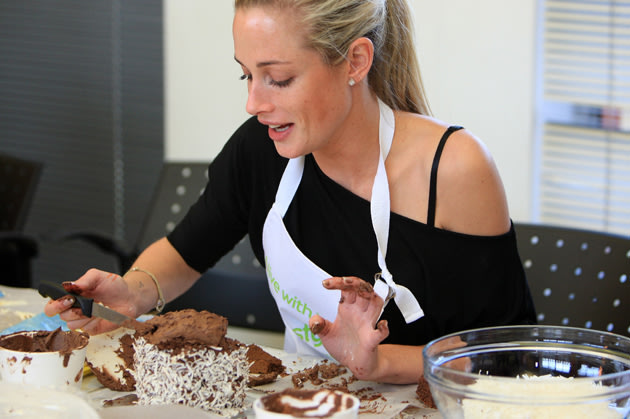 |
| Reeva Steenkamp. Image: Yahoo. |
It is shocking because the use of a person's opinions, social position and identity against the logic of an argument is one of the most classic fallacies identified by critical thinking. It's known as "ad hominem"- taking a debate "to the man." The point is that it doesn't matter who the speaker is or what they believe- the cold hard logic of their case is what counts towards the strength or weakness of their argument. In the rush of post-structural desires to recognise biases, to be aware of our own subjectivity, to recognise the potential for prejudice, we have forgotten the centrality of logic to argument, the need to be critical, impersonal. Many of the people who were so offended by the attack on Mantel are those who have contributed most to the creation of this atmosphere of hyper-subjectivity. We have collectively made a world in which ad hominem attack is the norm. Now we have to live with it.
Subscribe to:
Posts (Atom)