Pages

Showing posts with label Etruscans. Show all posts

Thursday, 7 January 2016

Blogging Carnival : Grand Challenges

Ominously, this appears when you google image search Etruscan challenge. Ouch. It's Charun, Etruscan death demon, supervising the death of a bound captive. Cheerful stuff.


So, in the past I've taken part in the fab Doug Rocks-Macqueen's Archaeology Blogging Carnival, and I'll be doing it this year too. Two posts on this year's theme are coming right up.

And what a theme it is. Grand Challenges of Archaeology. The question is, what are the Grand Challenges of YOUR archaeology?

Well, to me MY archaeology is my own personal archaeological journey (vomit vomit x-factor language) and Etruscan archaeology (my preciousssssss, in best Gollum voice).

So this post is about the Grand Challenges of Etruscan archaeology, or rather, THE Grand Challenge as I see it.

And (drumroll please), I think the challenge of Etruscan archaeology is....

The production of new archaeological narratives for Etruscan people's lives. 

We really, desperately, need to come up with and share new interpretations of the Etruscan past. Time and again, in the past few years, we have seen remarkable developments in Etruscan archaeology. New discoveries of tombs barely damaged or even untouched by tomb robbers, new data coming out untainted by antiquarian excavation techniques. We also have incredible scientific advances: an intricate and carefully controlled study of Etruscan DNA which, for the first time, has some real answers of where these people came from and who they were. At the Milan Expo, Etruscan scholars shared their work through new digital technologies, bringing the Etruscans to a wider audience through 3D reconstructions.

Yet some very familiar stories are still kicking around, in and among (and in spite of) these new discoveries, methods and opportunities. The idea of the Etruscans as mysterious and unknowable, a frustrating mirage which obscures these wonderful leaps forward. The idea of princely tombs, linked to monarchial systems of government I've critiqued here before, a conception of Etruscan life which is more akin to a child's tale of princes and princesses than it is to a real evaluation of these people's life stories. These are old ideas with a venerable heritage- we can understand where they came from and why they are compelling. They continue to capture the imagination.

In my opinion though, these ideas are no longer an acceptable option for the Etruscological community, and to me it is wrong for us to continue to parrot them to the general public. It is almost ten years since Vedia Izzet (the person responsible for letting me loose on the unsuspecting Etruscans) wrote her seminal text critiquing these interpretative tropes. In that decade, little has changed. Her words remain as cogent now as they were on the day they were written. Perhaps, in the year before the ten year anniversary of its publication, the stories we tell as Etruscan archaeologists might change- we can look again at our data, new and old. We can experiment with ideas from anthropology and philsophy. We can think ourselves a new version of the Etruscan past, using objects and ideas. In this way, we might just be able to catch up with the excavations, the genetics, the technology. That is our grand challenge.


** There are signs that the challenge is being accepted- I'm very excited about a new journal in Italian archaeology, Ex Novo. It's open access and explicitly theoretical- a brave new voice. I have high hopes.**

Saturday, 2 January 2016

Back and bad... and bibliographies

Well, that was a nice break.

Christmas with a small child suddenly has purpose again. Magic, and a little smile on a little face, and trying not to let her pull the Christmas tree over. Watching her scoff down Turkey and her eyes light up at the first taste of chocolate pudding (and last for a while- she's back on fruit for pudding).

Also, and more importantly, Christmas equals husband off work which means lots of time for writing/editing.

And the resulting discovery has been fascinating. Turns out, I couldn't write for toffee in the final stages of pregnancy. I read all the chapters in one day, and was really not happy with the first couple. Then, boom! Chapter three, and back on form.Well, as close to form as I get (insert crippling British sense of self worth here).

How fascinating- I'm not sure why? Maybe the hormones. Maybe the poor sleep. Maybe the worry of impending life change and you know, the whole labour thing. And the whole having responsibility for a tiny human thing.

Yet, once the tiny human was here and napping, my brain suddenly worked again, or at least, so it seems. I'm editing well into chapter 4, and it really isn't as bad as I had feared when I started.

But what the writing gods give, they also take away. Because I'm only now realising how dire the footnote organisation situation is. In a popular archaeology book, what's the best way to reference? Obviously, Harvard is out. Footnotes at the bottom of each page are impractical. The only answer seems to be a series of end-notes, divided by chapter. That's what my favourite authors do. But then the bibliographic information is so divorced from what I'm using it to argue that it feels clandestine, naughty. I guess it's still there. A reader can find it. I suspect my editors will have the final call.

So, any thoughts? On writing-while-pregnant, or on bibliographic behaviour?

Tuesday, 10 November 2015

Flipping First Drafts

So, I have (finally, tonight, at 10:12pm) finished the first draft of Book the Second.

It's a snip at 57,000 words, excluding footnotes and references and acknowledgements and all the grown up caboodle. It's not huge, not by any means. But it's still over what the commissioning editor asked for- so a good chunk is going to have to go.

I cannot wait to attack it, pull it to bits, and rebuild it. I can already feel things wrong with it that are burning and itching in my brain, like little fleas determined to irritate me and suck out my writing flow. The last chapter was a struggle and a half as the editing fleas grew and swelled, becoming louder and more insistent.

The last time I finished something like this it was the first draft of my PhD, and there were no such issues. I was smug, happy and confident. My lovely supervisor would tell me where I had gone wrong and where to fix it, but it was done. To be fair, that was at least 20,000 words longer, so maybe I'd gone further into the dark place where your own work is the only thing you see. I'm hoping that the fact I can tell it needs editing, and major editing at that, is a sign that maybe I've grown up a bit since then. That I can even tell what those edits should be, that I can see where I want to shift and change and delete and grow, is giving me a sliver of hope for the future of the volume.

This must be what being a grown up feels like.

BUT wait, stop. Space. The essential ingredient, not the final frontier. I will not open any of the individual chapter word documents until December. I will not. I will let them lie fallow, turn my face to other ideas (of which more soon). Edit too fast, and edit too floppily.

Then, what? My usual plan of attack is print the whole thing out and attack it- see where it flows and where it sticks. Make a list of the instinctive problems, make a list of repetitive bits. Highlight words in paragraphs that you use too much (past culprits include "beautiful" "materials" and "striking." Moi?). Check your facts, then check them again. Same goes for references.

Then, to the victims. If you want to be a reader, let me know. You might get off lightly, with a chapter. You might be the poor schmuck who asks for the whole thing and receives it in the dark of a January night.

But, before your impending doom, any magical tips to turn a first draft into a second draft?

Wednesday, 14 October 2015

Sunday Supplement Etruscans

Image (c) The Sunday Times.


Yeah, I know. It's Wednesday, not Sunday.

But very unusually, I got my grubby mitts on a Sunday paper. We don't normally bother- pre-baby we felt like they were expensive and luxurious, so would get them very occasionally. Post-baby, we don't have time. My parents were here, and they looove their big Sunday broadsheet, so palming Silvia off on her father, I leafed through the different bits of the Sunday Times. And there, in the telly guide, was a reference to the Etruscans! Unfortunately, it was in relation to a really poor piece of archaeo-tv, a programme on the Celts that has been so comprehensively reviewed by the excellent Rachel Pope that I won't go into its faults (and there were many) here.

The TV critic, A.A. Gill, broadly shared Rachel's opinion of the Celts programme. He divined that the Celts were really a made-up people (a somewhat fair point, considering the machinations of 19th century cultural historians) and that the whole show was trying to overcompensate for that fact, cobbling together a tight historical narrative based on Roman texts, instead of exploring the complex interrelationships of these different communities across Iron Age Europe*.

But he had to go and drag the Etruscans into it, didn't he? I've recycled the damn magazine now (foolishly), but the gist was that the Celts were a made up people "like the Etruscans." Well. Well now. Who'd have thought I'd wasted so many years of my life studying a figment of the 19th century imagination, stirred up from Roman texts?

Well, big sigh of relief all round, I definitely haven't. The idea of an Etruscan people is right there in their own words. The term "Rasna" or "Rasenna" is used to refer to a collective group of central Italian communities who chose to define themselves with this word. It's thought to mean "people of the city," so the Etruscans are stating the centrality of urban living to their self-identification. It's central to who these people thought they were. It's (perhaps) what made them different from their neighbours, across the Appennines and to the south. So, Mr Gill, even if you are unhappy with stylistic attributions that stick art styles to archaeology and then to supposed ethnic groups, here is a group of ancient people who were quite happy to define themselves as different from their neighbours. Leave the Etruscans out of it, please. We have quite enough problems of our own to deal with in promoting Etruscan archaeology without everyone thinking the whole thing was made up.

In fact, help a sister out. ***Brazen publicity request/plug alert*** Can we please have a feature on the Etruscans in the Sunday Times Culture section, perhaps when my new book comes out? Let's talk. 

*In a massive and simplified aside, why are we still so scared to admit that on occasion the Romans were wrong? The ever-brilliant Mary Beard (who Gill has been deeply, misogynistically unpleasant to in the past) was opining in the same Culture section of the same paper that the Romans are really terrifically overrated. And that's from a classicist! Come on people (especially commissioners of archaeological TV), let's break free of two millennia of Roman intellectual oppression. Digression over. 

** In the magazine of the Sunday Times, Mr Gill was back with a review of what sounded like an atrocious and very expensive restaurant in London. He made a reference to "if Lidl did an own brand French fish soup." Mr Gill, they do- I tried it last night, and it's not half bad- tasted ok, no nasty after effects and cheap as chips. I suggest you give it a go, it was far nicer than the bouillabaisse you described forcing down in the review.

Monday, 5 October 2015

Telly Special: Questions and Queens

Secret History is back on Channel 4, and it's been a while since I blogged about archaeology on the telly, so I thought I'd share some thoughts on the first two episodes.

I want to start with last night, probably the more tricksy of the two shows so far. The hook was Cleopatra, and the film focused on the single minded quest of an amateur archaeologist to find her lost tomb. It was clear that the lady in question, Kathleen Martinez Berry, was living out her Indiana Jones fantasies, and fair play to her- through her stubborn refusal to give in, her bright optimism in the face of snubbing and snobbery (implied) and her incisive desk-based investigation, a rather exciting site is emerging from the desert sands. When you think of the hostility this woman has endured (and probably is still enduring, if social media is any guide) it is remarkable that she has kept going. Kathleen, an ex criminal lawyer, perhaps has exactly the type of thick skin you need to succeed in archaeological adversity these days. With enough money behind her, she has become a new kind of independent scholar*, steadily demonstrating that Taposiris Magna was a major Ptolemaic temple site with associated necropolis.

Of course, not everything was perfect, especially when it came to methodology. I would definitely have wanted a full Ground Penetrating Radar survey first off- rather than as a late doors attempt to find tombs. Collecting strategies also seemed unusual- there were shots of human remains being removed without being photographed in situ with scales in place (ALTHOUGH this could just have been the film's editing). If this was accurately represented, it would presumably not have happened if an experienced Egyptologist with strong documentation skills had been part of the dig from the start. What a shame.

More positively, there were so many fabulous women scholars featured. Dorothy Thompson from Cambridge presenting a papyrus fragment with Cleopatra's possible signature. Salima Ikram examining the amazing necropolis.

The first episode of the new series also featured an incredible female team- the women of the Rising Star expedition. As a claustrophobic wuss, I was in awe of their skill, strength and dedication. The entire excavation project was a lesson in public archaeology- live tweeted by director Lee Berger from above ground, (I think) webcams so you could follow the discovery as it happened. And all this from a cave deep below the South African bush. I don't know enough about human origins to assess their findings, but from a scicomm perspective this was the business.

These two programmes have raised serious key questions for me, regarding how we communicate archaeological research. Firstly, Cleopatra. The hook is the same as the worrying trend of "finding" (in)famous people in the past- Richard III anyone? Do we need personalities to pin projects on? Why is the discovery of Taposiris Magna not enough? Another key question- in an age of restricted research posts and cuts to funding, are independently wealthy amateur archaeologists going to be a permanent part of the scene? If so, how can they be welcomed and integrated, encouraged to partake in best practice without being patronised?

Secondly, and more simply, Homo Naledi and Rising Star. How the hell can a project in the middle of nowhere (relatively), metres below the surface, have better communications than excavations in the middle of European holiday hotspots (Tuscany, Greece etc)? What can we do to share our research more widely, and more accessibly? If Berger and Co can do it, then why can't we?

Field seasons for 2016 are in the planning phases now. Let's start planning how to share, as well as how to discover.

*or a reincarnation of a very old type of scholar- let's party like it's 1899.

Wednesday, 26 August 2015

Shakespeare, Street Harassment and the Etruscans


Yes, really.

I'm working on the first draft of my second book at the moment. It's great fun, almost a formalised extension of this blog. The big idea is to explore the relevance of Etruscan culture to the modern world, incorporating analyses of historical texts and archaeological materials. But, as I've blogged about before, it's written for a popular audience.

I'm chugging on through- nearly done with Chapter 7. This is my favourite part of the book so far, because it deals with some pet interests of mine- the lives of Etruscan women and the state of modern feminism.

In the course of writing it, though, I've gone down the rabbit hole of chasing a stereotype. Etruscan women were independent and lascivious- everyone knows that. It's a scholarly trope. But where does it come from?

Well, the obvious answer is Livy. But how does Livy wiggle his way into England? Of course, the educated elite might have been reading Ab Urbe Condita for themselves, but Etruscan women also feature in a rowdier format.

In Shakespeare's Rape of Lucrece, dedicated to Henry Wriothesley, 3rd Earl of Southampton, we have a prologue designed to clarify the poem. Here are the Etruscan women:


“The other ladies were all found dancing and revelling, or in several disports.”

It's only a sentence, but an interesting one. In the original text, Livy describes the same women as:

"passing their time in feasting and in luxury with their acquaintances."

Shakespeare, has chosen to go further. He deliberately implies that the Etruscan wives are misbehaving- and their misbehaviour has a sexual undertone. The word disport, while meaning unrestrained enjoyment, has a sinful implication here. In several disports? In Elizabethan bawdy talk, disport has a definite link with copulation and sexual play.

The sexual infidelity of Etruscan women is useful to Shakespeare- it sets up a direct contrast with the purity of his Lucrece. It is her chastity, and not her beauty, which first inflames the villainous Sextus Tarquinius, who will go on to rape her and bring down disaster on his family.

In Livy's account, I would argue that there remains an implication that the Etruscan women are responsible for the demise of the Tarquinii as a ruling dynasty. For Shakespeare, however, they are more sinister. It is their sexual availability, not their dedication to luxury, that causes Lucrece's death with its spiralling consequences. One of the poem's messages is that the availability of loose women damages all good women, and not just by repute.

It's a fascinating scenario- one of the first appearances of Etruscan women in the English language. To what extent it is responsible for the survival of the stereotype of Etruscan women, I don't know. But there are plenty of issues in here that impact our lives as women in the 21st century. Women's enjoyment of pleasure, especially sexual pleasure, is still considered problematic by our society. Look at the victim shaming of revenge porn, or the hooting tabloids and the sidebar of shame.

There is another aspect to this shaming behaviour too. A particular politician's recent statements on women-only carriages after the exposure of figures of the rate of sexual harassment on public transport emphasise our daily encounters with the Sextii Tarquinii of the Tube. The rationale of these abusers remains that some women (denigrated with terms like "slut" or "whore")  like their behaviour.

In Shakespeare and in the street, the equivalents of the Etruscan women- women taking pleasure - are still being blamed for attacks on other women.

When will they be absolved of responsibility for the acts of men?

Tuesday, 14 July 2015

Writing for normal people

Normally, I write for weirdos. Other archaeologists, to be precise. We're an odd bunch, and I say that with utter respect and love. I adore reading academic archaeology, the more theoretical, the better. I love to attack an article, pull it to bits, figure it out and build it back together. I enjoy writing this way, too.

But currently I'm writing for the real world. For those who aren't totally obsessed with the dead, and who wouldn't dream of applying some bizarre social theory to a set of graves and coming up with an out-there-but-it-kinda-works interpretation.

I'm halfway through writing my second book (the first was my PhD, now available wherever good archaeological works are sold- so mostly on the internet then), which has an informal subtitle of "why you should give a damn about the Etruscans." Approaching the midpoint of the first draft, I've come to several conclusions about writing for a non-academic crowd, and I'd like to hear other thoughts.

1) Keep it snappy, sunshine. Endless clauses just annoy people. If you can't say it clear and concise, why are you saying it at all?

2) Don't get preachy. Nobody likes to read moralising tomes of self-improving blah. If you have an ethical point to make, do it straight.

3) Admit your own fallibility. Just because you're writing this book, doesn't mean you know everything. General readers can sniff out a self important phony as well as the academic crowd.

MOST IMPORTANTLY

4) Don't be afraid to have fun. It should be an enjoyable read, and so should be enjoyable to write. You can always edit out the bad jokes later, but I feel that a non fiction book for a general audience should be rollicking good fun while also making you think.

Any tips and pointers anyone? Thinking it through, I feel that these four points probably apply to good academic writing too. Especially the last one.

I'll stop skiving and get back to the grindstone now, before the baby wakes up.

Tuesday, 10 March 2015

Some day my "prince" will come

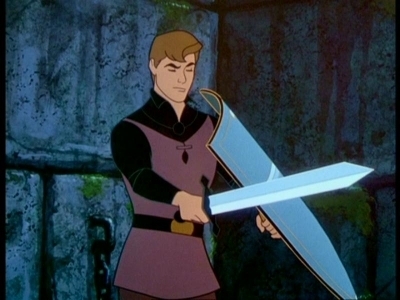
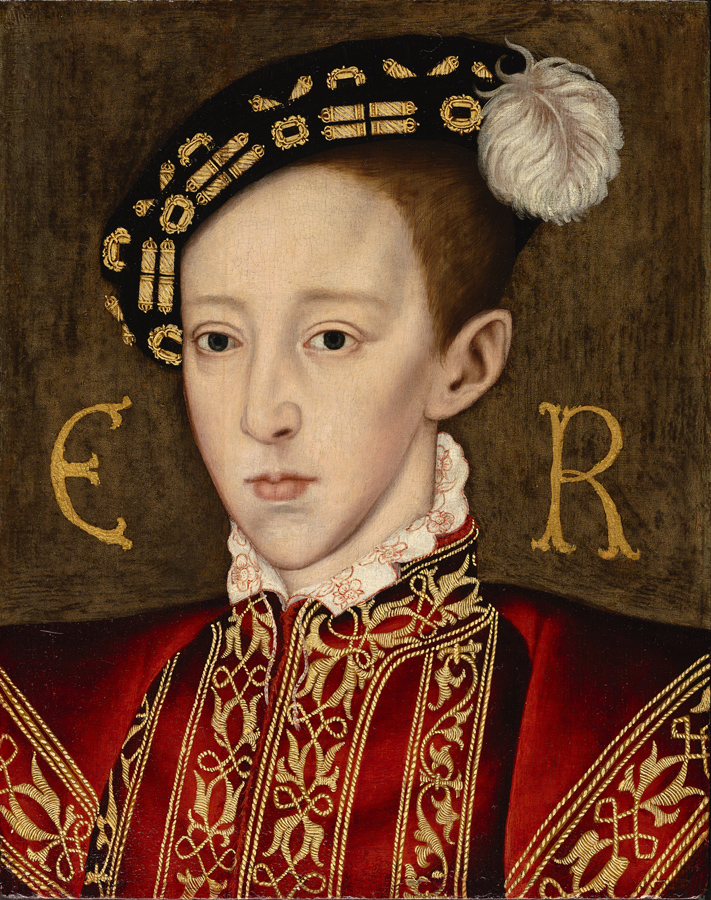
If I say a prince to you, what do you think of?

This guy? (Image: Telegraph)


This guy? (Image: Disney)


This guy?


Male of royal blood, right? Prince Charming, Prince Edward, Prince Harry. The Oxford dictionary defines a prince by his relationships to other royals- the son or grandson of a monarch.


None of these chaps look much like the individual who was buried in a tomb in Lavau, France during the 5th century BC, whose grave goods have been all over my social media for the last week or so. It's an amazing burial, with some incredible artefacts. My eye was caught by a gorgeous vessel imported from Greece, which looks like it shows a scene featuring Dionysian revelry- aka the formalised and semi-ritual consumption of alcohol. The metalwork, including a bronze cauldron, is pretty fabulous too- and some of it looks very Etruscan. In short, it's right up my street.

But we've been here before. A tomb was discovered, the excavators got excited, got the press involved, described the burial as that of a prince. That was in Tarquinia, Italy, in September 2013. But guess what? The burial turned out to be that of a woman. Cue lots of equivocating and burying of the story. Plus, it would just be darn rude to mention Vix.


As far as I'm aware, there haven't been osteoarchaeological analyses done of the individual buried in the Lavau tomb as yet. The detailed discussion provided by the rescue archaeologists who have been working on the burial since October last year doesn't mention this, at least. So, first off, we don't know that this burial is male. Second, going back to the point I wanted old Charming and Harry to make, we definitely don't know that this individual, even if it is male, was part of a system of inherited power that we might correlate to a monarchy.

Yes, it's a very impressive set of goodies to be buried with. Somebody wanted to make a big impression when this person left the world. It's conspicuous consumption-tastic. But that doesn't make this burial that of a prince- it makes it the burial of a wealthy individual with serious long distance trading connections. But that doesn't make for a sexy sound bite.

So, once again, we're back in the same old frustrating place with the same assumptions underlying every news story reporting this amazing discovery, relentlessly snipping away the joy in the find with inappropriate language and the promotion of a very particular set of stereotypes being squashed onto the archaeology itself.

But at least you got to check out one of the world's most eligible bachelors, right?


Wednesday, 11 June 2014

Intimate Worlds


Warning- big fat swear coming up at the end.

When I was a young, idealistic archaeologist in training (i.e. when I was doing my MA), I was obsessed with sex. Well, who wouldn't be, at 21, filled with all the hormones of youth, right? Except the sex I was interested in was sex that had taken place thousands of years ago. It was sex that, unlike the kind that you could actually have, was not being scrutinised in glossy magazines or talked about by everyone having or not having it. It was a kind of sex that had been forgotten, fleeting yet important moments from lives long lived and over, that archaeologists preferred to pretend hadn't happened and go back to more important things like, you know, trade and politics and arguing over theories of "Romanisation." To be fair, there were some scholars who were working on this material- people like Barb Voss, Marilyn Skinner and others- but I wanted more.

Young and self-righteous as I was, I wrote several in depth papers on this topic- arguing that risqué films of the Roman world, such as "Gladiator: Uncut" and "Caligula" were more honest about Roman sexuality than most archaeologists, in that at least they acknowledged that sex happened. The paper that was writing sample for my PhD used three case studies to construct an argument that an archaeology of sex was possible- and it was important. When I started work on the PhD, it was largely inspired by my interest in erotic vase painting how these images had ended up in Etruria, and how they connected with hammed up later Greek writings about Etruscan sexuality. By the end of the PhD, the dataset had expanded vastly- and the evidence forced me to look at the erotic scenes in context with other pottery images. So, the thesis ended up being more about alcohol and the construction of the self than sex. Trade and politics got in there too- I guess I sold out, moving from sex to booze and egotism. Maybe that's maturity for you. 

ANYWAY, last weekend I had an opportunity to get back into ancient sex. And it was brilliant. You might have seen or read some of the press surrounding the Sex and History project at the University of Exeter- it's pure genius. I wish I'd thought of it myself. By using objects connected with sex, a team of three brilliant scholars are bringing archaeology into the classroom for sex education, encouraging young people to talk about the objects, then moving on to expectations and wider ideas surrounding sex in our own society. It's a fantastic illustration of just how bloody relevant things from the past can be to some of the deepest issues modern young people are grappling with. If this fab programme wasn't enough, there's also an exhibition at the Royal Albert Memorial Museum in Exeter, bringing together ethnographic and archaeological material to create a thought provoking gallery filled with interesting, intimate things, often so meaningful they take your breath away. Small but perfectly formed, a group of us were guided around the exhibition by Tony Eccles, the curator, who told us of the struggle to get the objects on show, and the unique nature of many of them. My favourite was a small votive vulva- a carved vagina left at a Roman temple, either in thankfulness or in hope, part of a tradition of leaving representations of afflicted body parts for the gods to sort out. Whoever made it may have suffered from a variety of different problems- but the desperation and discomfort they went through was wound up in this emotional little carving. I hope they got the cure they were looking for.

Prior to the gallery tour, we had two great talks from members of the Sex and History project. Dr Jen Groves (who I think just completed the coolest PhD ever- major thesis envy going on here) told of the wonder of entering the Wellcome collection's stores, and seeing the vast scale of the collection of erotic material. The deliberate decision to collect and curate this material by Wellcome was obvious in the diaries and letters she presented from her archival research- his requests to missionaries for anything "phallic" made me grin. Then Dr Rebecca Langlands spoke about Roman sexuality- electrifying the room with her discussion of the disquieting mixture of aggression, violence, playfulness and pleasure that infuses so many Roman texts dealing with sex. She ended with what I think may be my new favourite Martial epigram:

"Rumour tells, Chiona, that you are a virgin,
That there's nothing purer than your cunt.
Nevertheless, you don't bathe with the right part covered,
If you have the decency, move your knickers to your face."

You really can't beat that for a sign off. But seriously, if you're in Exeter, you should go down to the RAMM and see this great free exhibition. And start thinking about sex- as archaeologists, we're still far too reticent about something that was happening every day, involving thousands of people in the past. 

Saturday, 28 September 2013

Pots: Everyday Irritations and Extraordinary Discoveries (Rant Warning)


I went to a conference last weekend, and gave a paper. I was happy and excited to meet up with friends and colleagues- the organisers are delightful, and I was hoping to hear some of the most interesting research on Etruscan archaeology. Sadly what I heard, in a lot of papers, was the same old culture-history interpretations, with people equating pots with particular “cultures” and the presence of particular objects in funerary assemblages as obvious and unquestionable evidence of gender, ethnicity and all sorts of other complex categories. Fine, fine- so be it, Etruscology remains firmly imbued in the politics and ideas of the 1950s and 1960s and to some extent probably won’t change any time soon. As long as I can keep pushing for new ideas, developed in the sixty years of archaeological engagement with social theory and anthropology from then to now, I don’t mind people keeping to traditional views. I may disagree with them on a fairly fundamental level, but that’s my opinion developed from my history as a product of a highly theoretical university and a free-thinking doctoral supervisor. What I do mind is individuals talking over young scholars, patronising even senior female academics in a highly sexist manner and treating discussions as an opportunity to hold court.

While I was going mad with frustration and being too cowardly to comment on these negative behaviours, however, really exciting Etruscan archaeology was taking place in the field. On that very same Saturday of last week, an intact tomb from a necropolis at Tarquinia was uncovered. I cannot overstate how rare and incredible and amazing this is. So many of the tombs the Etruscans painstakingly created for their dead have been looted- the profession of the tombarolo, or tomb robber, can be lucrative and has a long heritage. Most Etruscan tombs were cleaned out over the intervening centuries, although some have been emptied tragically recently, with artefacts removed and human remains left strewn around in a mess. Yet this tomb was magically, miraculously intact. 
All the objects were inside, in situ around the skeleton as they had been placed 2,600 years ago in the 7th century B.C.E. Lying on the funeral benches were the remains of an Etruscan person, accompanied by a large amount of pottery, some jewellery, a bronze vessel and an iron spearhead.

Now, this is all great. But that spearhead (I'm blaming YOU spearhead) seems to have caused some problems. Yes, this is a rich Etruscan burial- as intimated by the archaeologist in charge, Alessandro Mandolesi, who described the remains as those of an “upper class individual.” Yet all the media coverage has leapt to a conclusion I critiqued some months ago- how many times do I need to yell that this is not a “prince.”  Using that terminology is, as I have ranted before, an example of naïve, lazy attempts to put modern labels onto the past. I’ve said that before and it’s even more irritating when this happens in your own archaeological back yard. Yes, the burial was found near to a tomb known as the “Queen’s Tomb.” But the tomb is only known as such due to previous archaeological assumptions! Both the person buried in the “Queen’s Tomb” and the newly discovered “Prince,” even if DNA testing ties the two together, should not be considered royals, with all the modern day baggage that entails. 

Trying to tie that royal label into texts written centuries later (which is what has happened) only serves to exacerbate the situation. Yes, a King, supposedly from Tarquinia is recorded as having ruled over Rome in the 6th century B.C. But that doesn’t mean this burial is connected to him, it doesn’t mean the individual is a relative of this figure (who may not even be entirely real) and it only provides a tiny shred of information about Etruscan social structures, interpreted through the eyes of Roman authors!

Even worse than these right royal assumptions is the individual is being described as a “warrior” prince. That’s the spearhead’s fault. Not a symbol of masculinity, not a token gesture to ancestral warrior identity, nope. That spearhead means that the individual buried in the grave a) must be male; b) must be royal and c) must be a warrior hero. All this from one object that could have a myriad of different meanings. I notice that the pots have been conveniently shoved to one side- he’s not a “banqueter prince” or a “glutton prince” or a “drunken prince.” No- our own cultural values that prioritise male aggression jump straight on that spearhead and use it to transform this extraordinary tomb into an example of the same tired interpretations that were driving me so crazy last weekend.

 I don’t want to be negative. I don’t want to be ungrateful for this discovery or the chance to attend that conference. But until we are honest about the limitations of these approaches and the mismatch between them and the rest of the archaeological community, all the intact tombs in the world are not going to bring Etruscan archaeology into step with our peers in other areas of research.

To be fair, at least (unlike the Poggio Civitate infant remains stories) all the media I’ve seen has actually got something right and called the discovery “Etruscan” and not “Roman.” There’s still time though.

Tuesday, 27 August 2013

Bone: Digging Up Stuff


Thank you all so much for your lovely words (mostly not in blog comments but elsewhere) and for all the support that flowed in after last week's post about starting my new job. Another week has gone by and I'm still delighted- it is Bank Holiday Monday and I can't help wishing (in a sneaky little geeky way) that I'm at work! What a loser! Anyway, as it is a day off, I can blog- and I thought as it's time for a "Bones" post that I'd blog about the things I found this summer that actually connect up to people in the past. Things that you too can look at online, via the Poggio Civitate Excavation Database- we're proud to be fully open access (when the server is working, at least). Twelve artefacts that my team found in my trench made it into the cataloguing system that we use for artefacts that have a meaningful interpretative role to play. Of course, everything we find is recorded and in many cases drawn in our trench books- before being counted and recorded at the close of the book. Don't worry- all the information is safely stored in the magazzino, even to the weight of single pieces of slag.

I'm sorry that I can't tell you more about the features in the trench- I don't want to pre-empt the peer-reviewed publication and presentation. But I thought I'd write up those twelve things, including a link to them all- pulling together what they might mean for the site, as well as how they were recovered.  I often joke around with colleagues about "interpretation at the trowel's edge." This series of posts, I suppose, is exactly that- a biographical account of the discovery of these fascinating yet often mundane objects.


The first of my twelve had the honour of being labelled as PC20130001. It was found when I wasn't even in the trench, as I had gone back to England to have the interview for my new job! Our fab site director Kate stepped in to supervise for me, so this is really a find for her! My trench assistant John "Georgia" Duggan (who will have his own trench next year hopefully as he is a fantastic excavator and a great prospect for the future!) was working on the removal of a large stump, when out popped this particular find, a shining lump of metal. Everyone (I imagine) got excited, as there were little nubs of gilt on this object, which made it look really enticing. Unfortunately, it's not Etruscan. It's probably post-medieval. It's a gorgeous bronze pendant, which would have been covered in gilding, and it's moulded to show the figure of San Domenico on one side, identified by an inscription, and a woman and child (presumably the Virgin) on the other. It's a find that made me sad when I saw it after I got back- and not just because I missed finding it. I imagine a person losing that pendant, and feeling sad and full of regrets- and I know that's just splashing emotions inappropriately all over the past, but that's my honest and instinctive reaction. More seriously, the pendant confirms what we suspected- the area in which the trench was located, Civitate A, was clearly still being traversed by people in the centuries after Poggio Civitate was abandoned- over a thousand years later, someone came through, perhaps a shepherd or traveller, and lost this pendant. 


The next find (PC20130108) is Etruscan, or at least, I assume it was. And unlike the previous find, this one I found myself. I was excavating with my trowel in the eastern end of my trench, working in a locus (the locus system defines the contextual layers of soil in the order that we remove them, which SHOULD be the reverse order in which they were deposited) that was producing relatively large amounts of bone and pottery. I spotted this weird shape with my trowel- a circle, with a dirty cream edge smeared with dark earth. I rubbed the object very gently with my fingers, and pressed in the centre where the mud was- to find that it fell away. A super careful probe with my trowel point, and it was clear that this was a nicely hollowed out piece of worked bone, making a perfect little oval. I pretend that it doesn't matter who finds things, as we're all part of a team- but I was pretty chuffed to have this gorgeous little object turn up. The layer that this piece of worked bone was found in was full of Etruscan material- the area was clearly pretty busy in antiquity! Yet this little fragment proved that larger objects incorporating worked bone were either being made or used in the vicinity. 

The third find is again an industrial one (PC20130112). It looked bloody ugly as it came up- and as we found quite a few examples of these, I can't remember who actually found this one. Sorry! It was probably one of the great students we had on site this year- sharp eyed and sharp brained. One of them probably thought that this was a piece of pottery at first- a heavy, lumpy piece of coarseware.  Then they turned it over, and found a weird covering spread all over the inner face- a little bit shiny where not covered in dirt. The weird covering was actually molten metal- this pot was used in the process of creating iron artefacts- the find was a crucible fragment. So, not only do we have evidence for the presence of worked bone and possibly worked bone production, we also have evidence for metalworking in the vicinity of Civitate A. Someone, somewhere, during the Etruscan inhabitation of the site, was making iron implements.


The final find for this "Bones" post (PC20130136) is a little bit more exciting- and I remember the student who found it (I'm so sorry person who found the crucible fragment!!) as there were not many objects like this found in my trench this summer. Margot, a student from Mount Holyoke College, had quite a lot of excavation experience, and had even worked underwater! It was most likely the green sheen of bronze that first caught her eye- everyone on site knows that the colour hints at something special. Carefully using her trowel to free the delicate object from the soil, she called me over. It was pretty clear at first glance what Margot had found- a fragment of a fibula, or brooch, made of bronze. The coiled end and part of the pin were preserved, but the arch and catch were missing. We didn't find any sign of any other pieces of the fibula this year, even in slightly lower loci. So, I suspect that this object was already broken when it was deposited- thrown away, chucked out. Maybe it was too small to bother melting back down, maybe it broke while being worn and the piece was never recovered by the owner. But an Etruscan person was wearing that fibula at some point in the past, while they were living at Poggio Civitate. At least one person in this area of the site had access to a plain, but still quite classy, decorative pin for their clothes. 


So, there you are- my first four finds. I've linked in the find numbers, so you should be able to click on the "PC" numbers here and see the proper write up by our amazing cataloguer, Theresa. There aren't professional photographs yet- but there will be this time next year. Please enjoy browsing around for what other people found, too. Each find has a little biography, a story like the ones I've described here. The reactions of excavators are always fascinating to me- I would love to find some way of incorporating them into full publications, giving the people who do the digging a voice! How would you feel about seeing that for real? Do you think the internet provides an opportunity to open up archaeological interpretative methodologies? Or is recording instant reactions and assumptions a dangerous business, undermining the wider message published by an excavation director? I'm all for embracing subjectivity- but how far do we go? Let me know if you have any thoughts, or any discovery stories of your own.

Friday, 9 August 2013

Pots: Digging Everyday


Summer is i'going out- the excavation season is over, I am about to print out the boarding pass for my flight home. There is still a month (maybe) of sunshine and warmth left, but I will be gleaning it from an English sun, rather than a radiant Italian sole. Ironically, the former has apparently been far more reliable than the latter for everyone in the UK. By contrast, here in Tuscany there have been storms aplenty. The storms haven't kept me from updating this blog- that's my own fault. So, for my first post back, I thought I would blog about what it is to work on an archaeological dig- the pottery side of this oh-so-glam profession. Scruffy and messy, broken and worn- that's the state of me after six weeks of digging, just like any of the scrunched pieces of ceramic mess I've hauled out of the ground. But unlike them, I'm pretty bloody satisfied. We. Found. Stuff. I have to be a tease, until that "stuff" is published. What I can tell you, however, is that it was a damn good season. And this is the story of one day of it.

A usual digging day starts at 6am. That's if, like me, you aren't big on breakfast and can walk quickly. Other people are up far earlier, not least the fabulous cooks we had this year, who have been up for an hour by the time my phone squawks in my ear. Time to get dressed- the scruffification (ahem) process begins. Try not to sniff the clothes as you put them on, unless it's a rare treat of fresh ones. Sports bra first. An old t-shirt, sleeves cut off and collar ravaged by kitchen scissors next. Then the oldest denim shorts I own, that have been coming with me to this place for four years and doing sterling service at home, in other places where nobody can see them who will be horrified by their grottiness. Roll down to the kitchen, fill up my water bottles- 4l on board, and a hunk of bread and Nutella in each hand and I'm out and off down the road.

The walk to site, and the quiet time alone (ish) by my trench that is the reward of doing the walk at top speed, are perhaps my favourite parts of the day. The walk is powered by my iPod, and I try and think of nothing but how the air feels and how long I can make my strides before I feel like a total idiot. The hill looms above me, but once the climb begins I am a part of it. Well, sort of. It tries to throw you off with washed out trails, and brambles lie in wait for the unwary or distracted. To the trenches, yawning open. In the early days of digging the earth looks sullen and brown, full of small stones and roots, with tree stumps sprawling in what should be a neat, flat surface. I think about what I want to do to that earth. I do not think about what I might find- or, to be more honest, I try not to.

Students arrive at 7, and we set to work. The methodology is devastatingly simple- pick, scrape, sort, sieve, dump, repeat. The large pick is abandoned after the first few layers of soil, loci, are removed, and work continues with trowels alone for the latter half of the season. The action of the trowel is deceptive. "Scrape with your whole arm," I prate at the students. "Don't use your wrist." It's a surefire way of catching blisters. Equally important is to use the trowel like your hand- hold it like a pen, it's an extension of you. Don't shove it, point with it. It's often better to use the trowel upside down, twisting and flicking the dirt rather than pushing and flailing at it. This is surprisingly hard to explain over the internet.

The trowel should be the first point at which you spot the past. The hand sort is the second check, the sieve the third. You can always repeat the last two, if you're worried you missed something. A paranoid flash of green- was that bronze, or just a leaf? The first two weeks (and more) of any season resound to the nervous questions "is this a rock?" "is this something?" Always better to ask than to assume negatively. A rock is a rock is a rock- but what if it's polished, worked or flaked? Even a rock has a story to tell. The bulk finds squat in their boxes, which are more confidently filled with each passing day. The special finds (anything not undecorated pottery or unworked bone fragments) have their positions and elevations recorded in the trench book, before being drawn into it.

The trench book is my prrrrecious. The pages are how I will be judged as an excavator- you can see me all over it, you can see how tired my hands are by the end of the day, when the standard of drawing, which is always as high as I can make it, begins to wobble. Each precious layer of soil is recorded, every change and variation. Each move of a pick, each scrape of a trowel- it's all in there.  Features and finds are drawn, stippled to show light and shade and pattern. The rhythm of digging gets broken by these moments of solitary contemplation- how do I accurately and quickly give the impression of that exact stamped decoration? How to draw a squodged up piece of slag? When it's done, I'm back in the trench.

Lunch comes at 12:00. We hide in the shade for a precous half hour, scarfing down bread, crisps and water. The accompaniments vary, but those are constants- carbs, salt and fluid. Peanut butter and jam on Fridays, sometimes. Cold meats, leftovers from dinner, cheese and eggs. Vegetables, fruit. The sandwich combinations make the mind boggle. We don't care- we're hungry and it tastes fantastic. When the food is gone, the mind goes back to the things in the ground, and after a few short minutes the body does too.

The day ends at 3:30. By ten minutes before, I like to be counting up the bulk finds- locus by locus, carefully recording what was found where. Elevations for the end of the day are taken- how far did we go down? This season, not far. In previous years, metres, though not in a day. Finds, bulk and special, all go to the magazzino- store and conservation studio, to be handed over to cataloguer and conservators for their scrutiny. If you've closed a locus, final pottery and bone counts can be done for it. The trench book must be typed up, to be included on the website

That's the end of the excavation day. And guess what, you're bloody knackered.

Monday, 10 June 2013

Bone: Greeks vs Etruscans


Let battle commence! A gorgeous vessel by Nikosthenes from the British Museum

I'm off to Italy next week. I can't wait- heading out into the sun to dig of an early morning is one of the best feelings in the world. Before I go, I will be putting the finishing touches to my PhD- then leaving it to fester for a few weeks so I can proof read it properly. Looking back over my PhD, while it's about pottery- the Etruscan experience of pottery- there's an underlying subtext that weaves through every chapter, ever conclusion. That subtext is, perhaps, the second biggest argument in Etruscan studies. The biggest argument is where the Etruscans came from- a topic for another day. The second debate is over the relationship between Greek traders and colonists sneaking their way into the Tyrhennian from Sicily and southern Italy and Etruscan communities, who had themselves expanded their influence all the way down to Campania. There has been to-ing and fro-ing over this issue for over two hundred years- and to-ing and fro-ing is putting it very lightly. Some of the most acerbic, bitter and downright nasty language that I've ever read in an academic context was written about this problem. In the Greek corner, classical archaeologists and scholars howl for the Etruscans as mindlessly consuming Hellenic culture- their only role was to keep it safe for future generations in their helpfully secure burials. In the Etruscan corner are prehistorians and more classical archaeologists who yell back that the Etruscans were independent traders, strongly competing with a rival who, thanks to their later dominance, had the opportunity to traduce them in print (well, in tablets).  So, as I'm loosely doing a series in my "Stones" posts, I thought I'd do another one with "Bones." Over the sumer, I will trace this argument forward from its origins to the contribution of my thesis to the debate, trying to tease out what lies behind the passionate arguments that still kick off whenever Greek and Etruscan scholars wind each other up, in print or the pub.

So, where did the trouble start?

The origins of this argument date back to the rediscovery of the material culture of the classical world and the 18th century. Prior to this, the Etruscans had variously been adopted as independent ancestors of the Florentine Medici, allowing them to claim a past separate from Rome. Generally, their PR was pretty good- the discovery of the first Attic ceramics at Arezzo in the 14th century resulted in these objects being attributed to Etruscan makers- a feather in the Tuscan cap. Into the 1700s, Etruscomania was sweeping Europe- aristocrats built Etruscan salons, and the potter Josiah Wedgwood developed an Etruscan-inspired range. But by the later 18th century, as knowledge of Hellenic culture was increasing, the Etruscans lost their place in the classical ancestry pantheon, squeezed out by Greece and Rome. It's mostly this man's fault.


Johann Joachim Winckelmann, gazing innocently out from those doe eyes from this lovely portrait, opened this can of worms. You wouldn't guess his impact on history from that gentle expression, would you? He looks like a generic 18th century Grand Tourist, a gentleman with aquiline nose and a suitable pretension to scholarship. However, Winckelmann was an amazingly erudite scholar- he more or less invented both art history and classical archaeology. Born in a poor family in 1717, he managed to leave his background behind through devoting himself to study- an example of serious social mobility for the 1730s. Winckelmann's obsession with classical Greece began as a teenager- it intensified in the course of his study for a theology degree at Halle University, and finally found employment which allowed for his passion as a librarian for a rich German aristocrat. From this post, he eventually managed to publish his own work on Greek art, and in 1751 moved to Rome to pursue his studies further. His masterpiee, The History of Art in Antiquity, provides a chronological analysis of art in the ancient world- and it incorporates a study of the Etruscans.

For Winckelmann, Etruscan art was a poor cousin to Greek perfection. He chose to compare Greek art to every other form of art in the ancient world- and, of course, nothing could compare. Greek statues and paintings captured naturalistic forms of human life, they were beautifully composed, they expressed pure emotions reflecting the moral superiority of Hellenic society. On the Etruscans, Winckelmann is pityingly scornful. He compares Etruscan imagery to a young boy who has got in with the wrong crowd- he is violent and uncontrolled. By contrast, Greek art is like a well-brought up young gentleman, modest and knowledgeable, a true citizen of the world. The same tone is applied to a metaphor about rivers- Etruscan art is like a raging torrent, bouncing off rocks, while Greek art is a softly flowing river, gently fertilising a green plain. (Some of us prefer torrents to sluggish muddy-bottomed ooze, but then that's just so much sour grapes from me!)

Winckelmann's opinion was plain- Etruscan art had just got it wrong. The Etruscan representation of the human form was either too extreme (bulging muscles popping out everywhere) or unrealistic (carefully stylised figures with the wrong position of the hands and feet). By the time Greek art starts to arrive in Etruria, it's almost too late- the Greek imagery tries to civilise the Etruscan barbarians, but the fools can only make pathetic imitations- nowhere near the real thing. It's only in the late classical period, when Greek art begins to be copied more effectively, that the Etruscans are worth a damn.

I'm being a bit unfair with my paraphrasing here. Yet I think it's justified (although I wouldn't and haven't written this way in my thesis- but hey, what are blogs for?) What Winckelmann did was set up a series of value judgements about Etruscan art, while simultaneously imposing a methodology which would perpetuate them. So, in his eyes, the only proper way for an art historian/archaeologist to go about their business was to compare objects to other objects and look for signs of development. Remember me writing about social darwinism the other week? This is artistic evolutionism in action- a hundred years before the Origin of Species. If it's beautiful, it's civilised/better. Greeks make "better" art, so their civilisation is more sophisticated. If you only methodology is based on value judgements, created from a very particular set of social sensibilities and conditioning, the Etruscans are going to lose every time. In this way of thinking, it's obvious that the Etruscans would want objects made by Greeks- exotic, beautiful objects that were as alien as they were exciting- because they were just better than those they made themselves. This comparitive methodology doomed the Etruscans to a place as the ancient world's underdogs for at least the next hundred and fifty years.

But some of us love an underdog. And in the next "bones" post, I'm going to chase this argument forward from Winckelmann to the 20th century, and the resurgence of the Etruscans (ahem).*


Ok, so maybe not as "perfect" as an Attic red figure vessel... Etruscan red figure Calyx Crater from the British Museum, showing what happens to people who criticise the Etruscans... well. Not really. I'll just give you an evil in the pub. Although Winckelmann was murdered, age 50, in Trieste... I'm pretty sure there's a horror film in there somewhere....L'Etrusco uccide il studioso..

*I apologise for the deeply partisan nature of this blog post.... when it comes to Etruscan-bashing, I just can't help myself. I have also been known to describe the Etruscans as "us" and Greeks as "them," but only after several free glasses of conference wine make me let my guard down. I hope I'm not alone in this- please do let me know if you are similarly passionate about a particular faction/group in the past- I'm envisioning fans of Sulla, Octavian and others fessing up with abandon. To say nothing of all the British Iron Age people I know who detest those dastardly Romans...... I guess this is why you shouldn't pretend to be objective.