Pages

Tuesday, 10 February 2015

50 Shades of Material Culture


No, not a Munsell chart.

Nor the hilarity that resulted in reading the said book during lunch break on site, with different diggers taking on the different voices.

A good few shades darker than that.

I was actually thinking about the material culture of verbal and emotional abuse. That's what the film is about, that's what the book is about. The lifestyle of the antihero is wrapped up in objects, and quite apart from the contents of the Red Room of Pain, it is through some unsuspecting things that the emotional abuse of the series plays out. The publicity surrounding the film's release on Friday, perhaps combined with the recent publication of a project focused on the prevalence of online abuse in archaeology led by Sara Perry, and being quizzed by the health visitor about my relationship ("do you feel safe?"), has had me thinking about about emotional abuse in the past.

Physical abuse can show up loud and clear in the archaeological record- fractured bones, violent death. Yet the pernicious removal of a person's agency and confidence is harder to spot, the grinding misery of manipulation, the panic and fear of being found wanting, the increasingly desperate attempts to please. These are experiences that can be mediated through the simplest of objects, including some that we find all the time.

Dropping a pot, it smashes on the floor. A sarcastic voice lashes out, ripping off yet another layer of self. You're clumsy, you're useless, you're a waste of space, why do they even put up with you?  Yet when we shove the fragments into a finds bag, there's no echo, no obvious sign of the context in which that vessel was broken- in which a person might have been broken too.

 It's not always the whips and handcuffs that have the most devastating effect. The pen used to sign the infamous 50 Shades contract by Anastasia Steele bears no trace of its use, signing away a woman's control over her body, her time and her self worth. I chose the image at the top of this post based on the shirts- their exact uniformity, their careful curation as a collection of costumes projecting a very particular and disturbing identity that thrives on the manipulation of other people, sexually and otherwise. The biographies of these objects, their life stories, can be tainted with deep and long-lasting pain just as surely as a fractured cheekbone speaks of a blackened eye and swollen face.


The problem, of course, is that these narratives are exactly that- stories. They are marooned in the use life of an artefact, trapped in the sticky mess of use and reuse, the long mist between the making of a thing and its disposal. How can we excavate the dark side of things, exposing hurt and humiliation?

Thursday, 22 January 2015

Sight for sore eyes... proof reading

Somebody fetch me some new retinas (retinae?)

I thought I was a pro at proof reading. Smug statement, but based on fact. I proof read at work a LOT, and try and snag and snip and be as pedantic and annoying as possible to spot every last little typo or weird caption or funky line break.

But this week, I have proof read so far:

- a chunk of things for work
- two articles
- the entire text of my first book

The first two were ok. The work bits and bobs are concise and printed out and easy- you can't miss a page break in the wrong place when a caption is smeared across two pages instead of one. Even I can't miss that, and merrily curse myself and fix it.

The articles were also fine- a little harder to spot things amiss, on a screen and all. They were still neat, contained, and I could go through methodically line by line and section by section- the journal editors of one had organised the article in that way, and the other... well, I printed it off, just to be safe.

The book. That was a different kettle of leaping, jumping, flapping fish- too big to print, tricky to compartmentalise, so familiar that I finish its sentences for myself and have to FORCE my attention on every word, every letter. It's done- and it's fine, and I did find things wrong (always reassuring- if I don't spot a mistake, I assume I've missed one- that way lies paranoid madness).

But is there anyone smarter than me at this? (I really hope so, as I am pretty damn dumb). How do you fight your own lax mind, when it's striving to ignore what you can see and insert what should be there?

Let me know if there's a genius tip- hypno-proofing (can you tell I've been reading about hypno-birthing?), proof yoga, a 1000-words an hour proofing rule? Initiate me, o proofing priests and priestesses!

By the way, humble brag alert. The book (the first book) will be out soon. I'll no doubt post some gushy mushy yuck on here when it is, emoting about how the cover makes me feel. And all of you will leap from your computer screens weeping tears of joy at the chance to read about Etruscan pottery from a phenomenological perspective**. Yeah, you will.

** In an aside, Melvyn Bragg and company on In Our Time talked about phenomenology today. I think anyone studying philosophy or archaeological theory should have a listen- NOT to learn, but to feel comforted that Melv can't pronounce phenomenonmenonololology either.

Tuesday, 23 December 2014

The Best Christmas Gift

Is not being in hospital.

I've never really been (touch wood) a person with extensive experience of hospitals, sickness or ill health. Oh sure, I've done stupid things and got mended and sent away again, or toddled off to get jabbed and poked as required (travel injections, smear tests etc). But I've never actually been properly unwell.

Until I ended up in A and E, six months pregnant with a pulse of 154 bpm at 1am, a long way from home after a work event, freaked out and frightened and feeling terrible/terrified in equal measure. The lovely staff wanted to admit me, I wanted to go home. We compromised- I saw my equally brilliant GP later in the day and spent a week in bed with what I can only describe as the most god awful achy flu. The next time someone with a cough and sore throat tells me they have flu I'll flip. Getting out of bed to get a drink of water left me exhausted and in pain, it was that ridiculous. I had more blood tests later in the week, and noises were made about other more serious underlying problems. The tests for the serious scary things were clear, and the accompanying threat of being admitted to hospital was lifted, and I'm feeling better all round.

The whole experience has underlined something I've blogged about before, a pet hate of being an archaeologist. When people say, oh, don't you wish you lived in the Etruscan period? The answer is no. Not for a moment. Not for a second. I live in a country with a stretched but at heart strong health care service, which can whip up an x-ray, ECG, heart trace, white blood cell count in the middle of the night. Which can tell me that my galloping heart won't hurt the adored little parasite that is living in my lower abdomen. Thank Tinia, Menrva and the rest of the Etruscan pantheon for that.

And Merry Christmas to you too. More archaeology and less moaning in 2015. Promise.

Tuesday, 2 December 2014

Things they don't tell you about being pregnant (and an archaeologist)

Foetal skeleton from Culture 24. Poor little scooch.

 1) That everyone will have an opinion on the size of your stomach. "Ooooh, you're so tiny! You don't even look pregnant." "Oh my GOD, you look so fat today." All these people mean well, so you have to smile along. I can't help but think though, is there any other point when it's ok to screech about someone's abdomen to their face? Or any other part of their anatomy? "Look at that spot! Wow, it's so red and bulgy today, you look like pus is going to leap out of your chin." "Oh, love, you should really lay off the biscuits if you want to wear those shorts." You just wouldn't, would you.

2) People will try and touch your stomach unless your f*** off face is strong enough to repel them. Practice in the mirror, so that it comes naturally.

3) You will suddenly have a terrifyingly clear sense of perspective about archaeology and its place in the world, which is distinctly inferior to the small person growing inside you, and who is seemingly having a rave that involves doing "bigfish-littlefish-cardboard box" against your bladder. Dead people and their stuff are cool and all, but they can't enforce 50 toilet visits per day.

4) You also have a terrifying sense of your own utter normality- thousands, millions of women have felt those wriggles, and faced up to the fact that this thing is really going to have to come out of there. Most of them without any pain relief at all. You're not special, you're just another piece of human reproduction. Yeah!

5) That said, I do wonder about Etruscan childbirth. I'm guessing that those ladies had some trippy breathing exercises going down. Or shrooms. Seriously, though, that bit of pot from Poggio Colla has new meaning for the newly rotund me.

6) Apparently it's weird to cheerily announce to your midwife that you fancy squatting through labour, because you've regularly done 8 hour stints in that position before and nothing bad happened.And to then tell her that baby has already done a day of work on site in Italy, just at the point it was implanting and most vulnerable (whoops), in spite of your husband's pained expression.

7) You will suddenly post on your blog again, after an absence of almost six months. SIX chuffing months. Apologies, anyone who still checks in and reads this mass of ramblings. Apparently 40 of you did on the 23rd November. I suspect maternity leave (from end of January) may be good for blog output. But not necessarily for blog content and/or quality. You've been warned.

Wednesday, 11 June 2014

Intimate Worlds


Warning- big fat swear coming up at the end.

When I was a young, idealistic archaeologist in training (i.e. when I was doing my MA), I was obsessed with sex. Well, who wouldn't be, at 21, filled with all the hormones of youth, right? Except the sex I was interested in was sex that had taken place thousands of years ago. It was sex that, unlike the kind that you could actually have, was not being scrutinised in glossy magazines or talked about by everyone having or not having it. It was a kind of sex that had been forgotten, fleeting yet important moments from lives long lived and over, that archaeologists preferred to pretend hadn't happened and go back to more important things like, you know, trade and politics and arguing over theories of "Romanisation." To be fair, there were some scholars who were working on this material- people like Barb Voss, Marilyn Skinner and others- but I wanted more.

Young and self-righteous as I was, I wrote several in depth papers on this topic- arguing that risqué films of the Roman world, such as "Gladiator: Uncut" and "Caligula" were more honest about Roman sexuality than most archaeologists, in that at least they acknowledged that sex happened. The paper that was writing sample for my PhD used three case studies to construct an argument that an archaeology of sex was possible- and it was important. When I started work on the PhD, it was largely inspired by my interest in erotic vase painting how these images had ended up in Etruria, and how they connected with hammed up later Greek writings about Etruscan sexuality. By the end of the PhD, the dataset had expanded vastly- and the evidence forced me to look at the erotic scenes in context with other pottery images. So, the thesis ended up being more about alcohol and the construction of the self than sex. Trade and politics got in there too- I guess I sold out, moving from sex to booze and egotism. Maybe that's maturity for you. 

ANYWAY, last weekend I had an opportunity to get back into ancient sex. And it was brilliant. You might have seen or read some of the press surrounding the Sex and History project at the University of Exeter- it's pure genius. I wish I'd thought of it myself. By using objects connected with sex, a team of three brilliant scholars are bringing archaeology into the classroom for sex education, encouraging young people to talk about the objects, then moving on to expectations and wider ideas surrounding sex in our own society. It's a fantastic illustration of just how bloody relevant things from the past can be to some of the deepest issues modern young people are grappling with. If this fab programme wasn't enough, there's also an exhibition at the Royal Albert Memorial Museum in Exeter, bringing together ethnographic and archaeological material to create a thought provoking gallery filled with interesting, intimate things, often so meaningful they take your breath away. Small but perfectly formed, a group of us were guided around the exhibition by Tony Eccles, the curator, who told us of the struggle to get the objects on show, and the unique nature of many of them. My favourite was a small votive vulva- a carved vagina left at a Roman temple, either in thankfulness or in hope, part of a tradition of leaving representations of afflicted body parts for the gods to sort out. Whoever made it may have suffered from a variety of different problems- but the desperation and discomfort they went through was wound up in this emotional little carving. I hope they got the cure they were looking for.

Prior to the gallery tour, we had two great talks from members of the Sex and History project. Dr Jen Groves (who I think just completed the coolest PhD ever- major thesis envy going on here) told of the wonder of entering the Wellcome collection's stores, and seeing the vast scale of the collection of erotic material. The deliberate decision to collect and curate this material by Wellcome was obvious in the diaries and letters she presented from her archival research- his requests to missionaries for anything "phallic" made me grin. Then Dr Rebecca Langlands spoke about Roman sexuality- electrifying the room with her discussion of the disquieting mixture of aggression, violence, playfulness and pleasure that infuses so many Roman texts dealing with sex. She ended with what I think may be my new favourite Martial epigram:

"Rumour tells, Chiona, that you are a virgin,
That there's nothing purer than your cunt.
Nevertheless, you don't bathe with the right part covered,
If you have the decency, move your knickers to your face."

You really can't beat that for a sign off. But seriously, if you're in Exeter, you should go down to the RAMM and see this great free exhibition. And start thinking about sex- as archaeologists, we're still far too reticent about something that was happening every day, involving thousands of people in the past. 

Wednesday, 4 June 2014

InstagRome

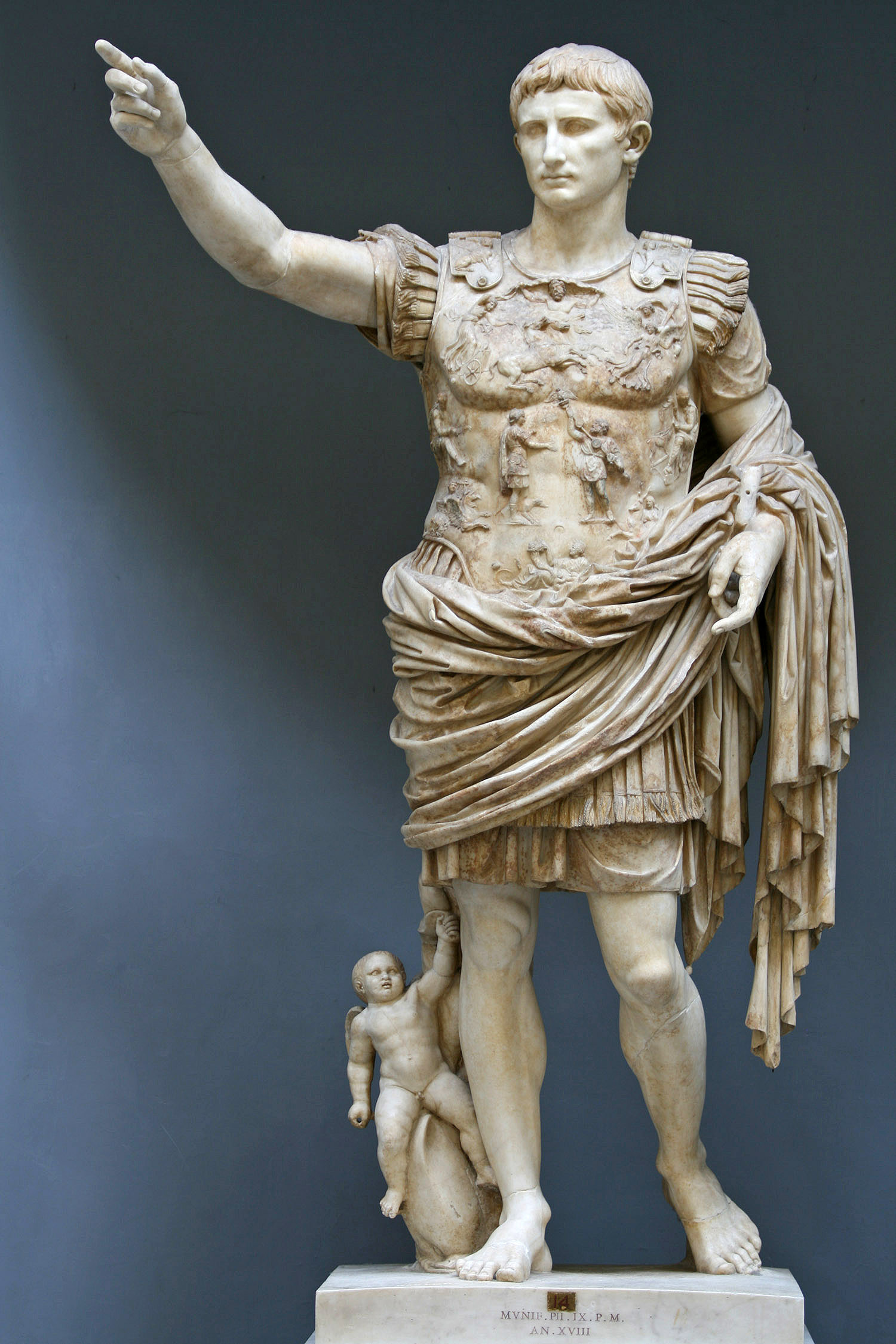
Augustus rocking a highly decorated muscle cuirass- no man boobs in sight!

There's been a kerfuffle over the last few days over whether or not the showing of certain body parts on a certain social media image sharing app is appropriate. Sparked by a pop star closing her account after topless images she'd posted were removed, Instagram's founders have been robust in their responses- they are not going to show (female) nipples, and that's that. Cue growls and grumbles (I don't think it's big enough to be outrage) on one side about the censorship of the female body- running along the lines that male topless images are fine, and sexualised images not showing nipples are fine- but an "empowering" self-portrait is not? Other observers have smugly agreed with Instagram, employing the good old "won't somebody think of the children" strategy, arguing that the internet is too sexualised as it is, and that younger users should not be exposed to nipples, among other things. 

This argument popped up at a time when I've been thinking a lot about the power of images, particularly images of human bodies. While that's a theme I've worked on for a long time, it still absolutely fascinates me how we access, control, shape and distribute images of bodies, and what we use those images for. They can be admired, idealised, fantastic visions to one person, and degrading, humiliating filth to another- with hundreds of different viewpoints on the same image between those two extremes. Nudity in particular has been a cause of trouble for millennia- when is it acceptable to show a naked male or female body, and what are the socially appropriate responses to that image? 

Rome forms a fascinating case study for these issues, and (in developing a new research project), it's a period I've been thinking about more and more. Public nudity amongst members of the same sex, within the curatorial context of bathing, was more or less acceptable (there is some concern about the exposure of mature male bodies to young men), but the display of images of the naked body during the Republican period remained a social taboo. Yet as Rome became increasingly influenced by Greece, where athletic, heroic nudity was a central part of representative practice, a problem arose that mirrors the current Instagram issue, although the issue was not sexualisation per se, but rather a lack of dignity in the naked person. The question remains the same, however- which is more important, public morality or fashion? 

Steadily, high profile Roman images of the body began to adopt the nudity of Greek style- coyly, by the use of the muscle cuirass, a moulded piece of armour designed to give the impression of nude perfection while keeping the underlying body hidden (handy for man boobs) or more boldly, with nude or partially nude statues produced and purchased by the elite. Women's nudity, however, caused more problems. While across pre-Roman Italy, images of nursing mothers had been entirely acceptable, and Greek inspired visions of a nude Venus were happily adopted, the two traditions could not merge into one coherent representative style- Greek taboos on the depiction of breast feeding were too strong, as Larissa Bonfante notes. As a result, while images of bare-breasted idealised motherhood remained popular, as on the Ara Pacis monument, representations of suckling fell out of favour in officially sanctioned contexts. That’s reminiscent of another social media row over representation- whether breastfeeding breaks Facebook’s rules on the sharing of appropriate images.


This has been a speedy, oversimplified post, skimming over a lot of far more complicated issues past and present. But the Instagram nipple spat brings up deeper questions about the way we show our bodies to the world- what is and isn’t acceptable to arbiters of social morality and to each other, and how those standards are not set, but fluid and continuously changing. Looking at the change in representation of the nude Roman body, I can’t help but wonder if we’ll be looking back and asking what all the fuss was about over a topless selfie.

Wednesday, 7 May 2014

Bad Boyfriend

I want you to know. I'm having an affair. My husband, innocently cutting up wood in his man shed (read cave) is aware of the situation, but there's nothing he can do. But before you text him, if you know him, or start giving us weird looks, stop. Because the affair is probably going to be lifelong, and it's with an academic discipline.

Crap metaphor? Maybe. Yet the more I think about it, the more this kind of archaeology seems like a bad boy lover, sometimes treating me like dirt (no pun intended), occasionally making me feel absolutely rubbish, yet still thrilling enough to keep me coming back for more. It's like a terrible, anti-feminist R and B song- I just keep on coming back to it. Of course, there's more to archaeology than just the world of universities- indeed, I have a great job outside of that world. Yet it's like the safe, funny, handsome alternative boyfriend who just can't compete with the dark glamour of the bad boy. I feel valued, appreciated for what I am, not just my research outputs, and I am (I guess) in a committed relationship with this kind of archaeology. Yet what am I doing, in my weekends and evenings, but working on publications, and thinking up new research projects? I'm playing away with that demanding, soul-destroying discipline, and I just can't seem to quit.

I've read a lot of blogs about being "post-ac" with people who are loud and proud about leaving academia behind. I don't feel like that at all- I just can't kick the habit. I would love to work in research in the future, and I'm full of energy and excitement for a new project that I'm developing- that first flush of love is in full flow all over again. Yes, I know it will result in heartache, agonising over applications, working my balls off to get a paper just right, worrying about datasets when normal, rational people are in bed sleeping the sleep of the just. Let alone the sodding referencing.

I know the risks- that so many get dumped for losing their academic figure after having children, or get left behind when the discipline moves on to something sexier and forgets about how exciting your specialism once was, no matter how much work you put in to get the spark back. The metaphor works right on to the end. And if a friend was in a relationship like this, I'd tell them to end it. They'd go "oooh but I looooove him" and I'd think they were wet. But I do love it, and I can't stop it now- I'm just not ready for the end of the affair.

Does anyone else feel like this? Husband just came in from the shed, read the first line of this blog post, went pale, then read the rest and looked at me like I was a crazy person. I really hope I'm not the only one still holding a torch for a discipline that I'm not sure loves us back.

PS- I actually don't want to post this now. I needed to write it but am very tempted to wuss out. Feeling brave, so fingers crossed, and on to the old publish button.