Pages

Monday, 22 April 2013

Place: Sexual Harassment and Archaeology

Last week, a couple of quite cool things happened. The first one was that one of my favourite examples of internet feminism, Everyday Sexism, celebrated their first year of existence. They celebrated with a piece charting their development from initial idea to a project that has changed the lives of its founders and given a voice to thousands of men and women. You can read it here. The second thing was that a group of archaeologists on twitter got talking about sexist practice in our discipline, after reading this article by Kate Clancy on harassment and fieldwork. It got me thinking- I've been a member of staff at fabulous excavation for the past three years. We've had our fair share of dig romances- couples making up, breaking up, hooking up (disclaimer- my only dig romance was when my husband came to visit last year. Him bringing me a cold drink at lunchtime is the best part of this). They are almost always created from the intoxicating mixture of conditions that excavations present: intense, long, physical working days. High temperatures. Pheromones running riot as personal hygiene trickles away alongside inhibitions. Add to that the opportunity to drink alcohol for the first time for a lot of our students and you have a perfect storm of potential for unrequited affection and inappropriate behaviour. To my knowledge, a harassment situation hasn't happened. I know that if I hear anything I regard as offensive in my trench, I will stop the conversation and move the talk to another subject. If I was worried about someone's behaviour, I think the staff would get together, discuss it openly, and develop a strategy for preventing harassment both on site and off it. 

But what if that harassment was coming from a staff member? It's a very egalitarian dig, and I think that our director would happily get involved on behalf of anyone who felt uncomfortable (he's fab, and probably why the whole project is so great). But in another place? In another situation when the director wasn't supportive, wasn't interested or was themself in thrall to outside circumstances? What if an external funder was behaving inappropriately towards a member of staff? What price the security and happiness of junior staff or students when compared to losing funding, or losing local support? What if, as Kate Clancy documents, individuals don't feel safe to report abusive behaviour in fear of losing their jobs? There's a BAJR (British Archaeological Jobs Resource) feed all about sexual harassment in commercial archaeology- and during our conversation on Monday the point was made that research excavations should be encouraged to sign up to similar principles of equality as those enshrined in employment law which apply to commercial sites. The American Anthropologial Association issued a statement to that effect in response to Clancy's research.

I think that these well meaning statements are missing the point. Research fieldwork projects are already signed up to codes of conduct for ethical behaviour through their individual institutions. Having "procedures in place" is not the answer, because the problem, as Clancy identifies, is that the repellent activities of those who harass and abuse others in archaeology are carefully choreographed to take place in a fashion which does not damage the career prospects and personal life of the abuser. In her words "It's all about who's watching." Perhaps one of the reasons that the excavation I work at doesn't suffer from this type of behaviour is that there is usually somebody watching, and that somebody is a person who cares about equality, personal safety and not behaving like a total ars*hole. Without calling out individual perpetrators, all the guidelines in the world won't hold them to account. In addition to projects where sexist bias and harassment is a concrete reality, there is one HUGE sphere in which nobody is watching. In which you can do what you like to who you like and probably get away with abuse. That's the digital world. Offensive emails. Creepy Twitter trolling. Abusive comments on a blog. All these can be anonymised. Nobody's watching, except the victim. It makes me think of my only brush with harassment, and wonder if it might have escalated quickly into something much worse in today's digital world.

During PhD induction, I sat next to another new student in one of the induction workshops. I was late, I just sat down. In the group worked that followed, I was already getting uncomfortable with this individual. He kept asking me increasingly personal questions, edging closer and closer in spite of my completely unsubtle piss-off glares and dismissive replies. When he asked me if I was single, I told him I was engaged. He asked me if I thought my now husband really loved me... then tried to stroke my hand and asked for my number. I gave him a fake one, a death stare, and a telling off. It didn't stop him following me around campus for the remainder of the week, until I brought husband to a social event for new PhDs. I was freaked out, frightened and effing furious. The only thing that stopped one man misbehaving was the sight of another, bigger man. My wishes were completely ignored in this situation- if I'd been single, would he have seen me as fair game? Would the stalking have developed from unwanted seating arrangements to following me home? Why was my lack of interest only valid when caused by my being another man's possession? In a world where you can find someone online the instant you know their name, what could have happened next in that situation, if it took place now? Facebook messages? Emails? Tweets? Finding this blog and posting horrible comments that I would have to read as moderator? Sexually explicit trolling? Sexist abuse of my work? What if the individual had been another archaeologist- someone I had to see at departmental events, knowing they were behind such a campaign of bad behaviour, or at least suspecting it? Would I have had the confidence to take such abuse to a senior figure in the university, or go to the police? Would I directly reply to such messages, or would that be giving the individual the response they crave? I don't know.

The third cool thing I did last week was attend a meeting for a new project I'm proud to be working on, that is looking to address some of these issues. Set up by the amazing Dr Sara Perry from York University, the Gender and Digital Culture project is looking to examine the use of digital culture by different groups, explore online experiences both positive and negative, and explore both the potential for the promotion of equality and potential for abuse in digital contexts- and not just in archaeology. I'll probably be writing more about the project in the future, but I really hope that we can develop some ideas to ensure that, even online, there won't be a place where harassment and sexist abuse can happen without repercussions.

What about you? Have you experienced anything like this, online or offline? You can comment anonymously here, of course. 

** Ironically, I had a massive "sexist pig" moment the day before our meeting. Went to bank to make a transfer to send money for images to the Italian Soprintendenza. Bank MANAGER (it said so on his name badge) asked me, in a voice I'd use to my 9 month old second cousin, "Do we need to change our name today?" I must have looked shocked, and said "What?" I had no idea what he meant. He replied "Weeelll, I saw your ring, so we need to change your name, don't we?" Because a married woman can't be in the bank except to transfer financial control to her husband. And any woman in the bank needs to be treated like the itty bitty kittykins with cotton wool for a brain that she is. God help the women who work with this individual.

Let me through that perspex screen and I'll....

Monday, 15 April 2013

Pots: Booze Britain

Once upon a time, in a land before I got PhD funding, I worked in a nightclub. It was one of the most formative periods in my life. I made amazing friends, enough money to go travelling, and gained a lot of self confidence from the job I did. Writing up the second draft of my doctoral thesis, and looking at its conclusions, I can't help wondering if they would be the same if I hadn't worked in a club that will remain nameless for four happy, yet occasionally chaotic years.

Check the ear piece on that!
I worked on the door during that time. I don't mean I sat behind a screen and took the money, either. It drives me nuts when people assume that's all I did- how sexist can you get? While I sometimes worked the till, I was part of a team that dealt with the dark side of student pissups. I cleared up vomit, pulled up knickers, rounded up so-called friends that abandoned drunks, broke up fights (usually by a combination of flirtation and headmistress voice but occasionally physically), administered basic first aid, yelled at queue-jumpers and generally tried to make sure people had fun, got drunk and didn't hurt themselves. I do sometimes wonder if the City and Guilds Door Supervision Level II was the most valuable qualification I ever got my grubby mitts on (and not just because I can use it to bridge that gap between PhD and gainful employment).

You know that my PhD is about pots, right? I posted a few weeks ago about the way that different pots control how you drink. Well, why do you need to control how people drink? Without those four years on the door, I don't know if I'd have made the link between ceramic controls, and social behaviour. Modern drinking vessels (pint and shot glasses, half-pint tumblers, alcopop/beer bottles) are ALL made for fast consumption- you drink quickly, you buy more booze, you get drunker. By using a cheat-technique (Jagerbombing, necking pints, strawpedoing) you can get even more down your neck in a shorter time. What is the effect of this? Here are the three major effects spotted from my time on the door as illustration:

1) Arousal. The amount of people eating face on the dancefloor will not come as a surprise. The amount of people taking things further, either in toilets or actually there against a wall or sat on a picnic table probably will. A loud "ahem" and an evil will result in this latter behaviour stopping, for the most part. Or loudly pointing out that the CCTV will make for amusing viewing in the morning. I'd love to know the amount of people who met their partner while drunk. I know I did. Anyway, the point is- this arousal can be a great thing- if you meet someone who returns your interest, and you both are free to have a good time. Or it can be amazingly destructive- unrequited attentions can quickly turn very nasty, leading to....

2) Aggression. The worst incarnation of this I ever saw was a man slashing another man's throat with a broken glass bottle. It was not nice. Not nice at all. Another incident resulted in me with two black eyes and a nose streaming with blood after catching an elbow in the face. Most "fights" involve a bit of pushing and shoving, maybe a thrown punch, lots of posturing and chest puffing out. The key is to get in there while the pre-violence rituals are going on, to stop the situation before it starts. Occasionally, there are incidents where unprovoked violence suddenly leaps up and punches someone in the face. It's not just men, either. Out and out cat fights were (mercifully) rare, but a lot of girls seem to enjoy barging into people, then telling their male friends they were pushed and gleefully watching the consequences. Or starting fights between rival suitors. The majority of incidents remained small scale, but were always uncomfortable. Most had the potential to escalate quickly, too. Full on fighting in the street between groups was utterly, utterly horrible, and luckily rare. But this consequence of alcohol is a pretty serious one. (The bloke who got his throat cut is alive and well, with a nasty scar. But it could have been very different).

3) Loss of bodily control. While linked to the two previous effects, I'm not talking about wobbling around or not being able to recite the alphabet backwards here, or about snogging someone you'd never normally fancy or getting mouthy. I'm talking about the girl who passed out in her own vomit on glass, resulting in cuts all over her back and hands, into which her own vomit had seeped. The bloke who was crying as he had no idea who we were and was convinced we were trying to hurt him as we fed him water and tried to find out where he lived so we could get him home. The many who pissed themselves. The even more who puked- sometimes on other people, often on me and my colleagues.

These were the effects of pots without any built in controls. The people who were using the pots I study had very different concerns. Can you imagine the extreme examples described above at a formal banquet in someone's home, in front of family and friends? Or at a large, public social event? Maybe social controls and environment would prevent the worst excesses, but seeing people pissed at wedding receptions and house parties makes me suspect not. But, just in case, pots so difficult to drink from that you couldn't just neck your pint and crack on to the next one were, I think, being employed. Look at the shape of this kylix. You need to be able to balance the bowl, negotiate the unwieldy stem, control the flow of liquid over the large rim, and deal with those handles. In my PhD research, I developed a scoring system for vessels like this, using handle shape, rim circumference/height ratio, rim circumference/human hand length ratio and volume. Vessels with a high volume (I'm talking an average of around 3l, which is about two modern wine bottles worth of booze), ususally imported from Greece to Etruria, always had high "skill scores." They needed knowledge to drink from them successfully, and they wouldn't allow you to consume their contents too quickly.

Image from imagehive

I don't know if I'd have noticed that, or even thought about it, without those years cleaning up puke and broken glass. So, thank you, pissed students. Except you, girl who threw up spaghetti puttanesca with tuna chunks in my hair.


Wednesday, 3 April 2013

Bone: Ice Age Art Review

Self portrait with portable art


Yesterday, I went up to "that London," grumpy Cornishman in tow, to see an exhibition I've been dying to visit since I first heard rumours of its future existence. "Ice Age Art: arrival of the modern mind" did not disappoint. Before I even get into reviewing it, and making some observations, let me say this. Go, go now, book it for tomorrow. I went completely en famille, and we all enjoyed it (well, I think we did. By the end of a boozy lunch afterwards that was the impression I got).
The family queue up

I've divided this review up into 3 sections: things I loved, things I liked, and niggles. So, here goes.


Things I loved:

-the drip, drip, drip of water which permeated through the exhibition, which, coupled with the darkness, gave a sense of claustrophobic caves and melting ice. This noise wasn't constant, or obtrusive- but it gave me a little shivery thrill each time it plonked out of the hidden speakers.


The cave experience doesn't come out so well in Instagram... who knew?

- the tunnel and cave, with the projection wall covered in changing images of Paleolithic rock art. Obviously, you can't just transport parietal art- but the curators had a damn good go. We sat next to a small boy who was enthralled by the images on the handily placed bench. He sat with his mouth open gazing at the flashing pictures, the bison swooping across the wall. A long time ago, in an undergraduate class, my group designed a museum exhibition centred about recreated rock art in an atmospheric cave-like setting. It was very weird seeing this realised in a manner 1000 times more sophisticated than my student dreams. And the fact that all those "enigmatic marks" flashed onto the narrative scenes in time with the dripping water noises like hallucinations at blink-and-you'll-miss-it speed was fabulous.

- the material. Just- wow. I saw the swimming reindeer. I saw Venus figurines. I saw the earlist ceramics from Dolni Vestonice. There was a replica Lion Man. It was all gorgeous- the haunting beauty of the figurines, the bittersweet images of animals on tools designed to slaughter them more effectively. It's just such a shame they are regularly so tiny- although this is completely part of their power, it did mean that a lot of people hustled around one small object, which kind of diminished the experience. We went quite early in the morning, and it wasn't too bad- I'd recommend other people do likewise.


Glorious, beautiful objects. No flash was used to take this picture.


Things I liked:

-the link with modern art. This worked really well, and didn't feel forced. My non-archaeological half is a big fan of Henry Moore, and he lapped up the connections. I felt like it helped him connect with and appreciate the archaeological materials more.

-generally, the tone of the commentary. You can't interpret this sort of art too much, and I thought they balanced it relatively well- introducing quite complicated ideas like the increased intensity of making miniature figures, but stepping back from certainty. I liked this, but my brother hated it- he wanted a bit more honesty about what the curators thought, or a bit of fronting up on the unknowability of the deep past. It's a fair point- adding a question mark to a statement does leave you in limbo I suppose.

-the gift shop. Tea towels framed as accessible art on the walls- copied and now soon to be resplendent in my house. Good idea, I'll copy that thank you very much. Exit via the art to take home- no ordinary gift shop. The cuddly mammoths were also a highlight. *


Niggles:

-no touchable replicas. While the video showing how the Lion Man was made was great, it would have been wonderful to have little replicas available to touch and feel. The statuettes and figurines were (to me anyway) made to be held, to be rubbed between finger and thumb. The exhibition felt very look-don't-touch and this was a real shame. Maybe there are handling events that I missed.

-a little light sexism. This was my real irritation. I took a photo of the worst panel-culprit. Apparently, men's identity alone is tied up in hunting implements. The old "man the hunter" stereotype is still around, even though I thought he'd been feminist-critiqued into oblivion. Yes, women in many modern hunter-gatherer societies don't hunt-but some do. We have no idea exactly who was doing the hunting in the Paleolithic, so let's not smudge ethnocentric gender stereotypes on the past please. Rant over.

Oh, a man's hunting kit? Who else could possibly have one. Grrr.


So, all in all, a great day out, some amazing archaeology and a lesson in atmospheric exhibition curation. Have you been? Did you like it? What are your loves and hates and thoughts?

*Did anyone else have the "Our Mammoth" books as a child? A family defrost and adopt a lovable mammoth called Buttercup. Beautifully illustrated and fabulous fun.


Monday, 25 March 2013

Stone: Some Incoherent Thoughts on Volunteering

Confession: I'm frightened to even post this blog.

It's a week where I should be talking about a "Bones" topic. I was going to post the follow up to the NOT mysterious Etruscans piece. But I'm not doing that.

Instead, I want to talk about something sad, which is dressing up as feel-good fun (in some cases, literally). It's eating away at the subject I love, while simultanously pretending that nothing is wrong, and, in fact, things are better than ever. I am tempted to get all melodramatic and go the whole way with playing as the Titanic sinks metaphors, but I'll spare you the hyperbole.

If this issue is so important, why on earth haven't I mentioned it before? Well, the answer to that is because it's so personal, and so loaded. I didn't want to be accused of negativity, of not wanting to do hard work to get rewards, of being lazy, of being over-priveleged. I wrote a few weeks ago about failure, then dressed it up in pretty words of perseverence and positivity. There's not much to sugar coat this particular topic with, at least for me. The worst part is that I'm complicit in the system- I'm now a part of it.

That system is working for no pay, and looking happy while you do it. Also known as volunteering. Emily Johnson bravely raised the issue on Twitter today, and has blogged about it here. There's a whole discussion going on over at her blog and on Twitter (#FreeArchaeology), and it's given me the courage to post my two cents here.

So, what's not to love about volunteering? Passionate people get to help others, the state saves some cash, and heritage organisations get the help they need? The problem is that those passionate people need to live. They have rent to pay. They have food to buy. They might even (once in a while) want to buy a book to read up on the very areas in which they work. A large number of those passionate people are living with large debts from university qualifications which, while securing them a volunteer position, haven't got them anywhere near a job.

I appreciate that not everyone can work in the industry they want to (even after a long hard slog to get the qualifications they supposedly needed). I know that volunteering provides an opportunity to try new things, and to gain skills (I know this first hand as I'm doing it now). BUT A VOLUNTEER SHOULD NOT BE DOING THE WORK OF A PAID EMPLOYEE FOR NOTHING. I'm lucky with where I volunteer- they are supportive and only ask for one day a week during school holidays. I love the work and the people involved. But they won't be giving me a job at the end of it, even if they write a lovely reference. I know people who have interned or volunteered for extended periods of time- given their labour, for free, to organisations with no intention of employing them. They didn't get permanent positions either.

No matter how much you dress it up in shiny "Big Society, heritage for all" rhetoric, this is work without pay and without prospects. It's open only to those who can afford to take time out from working, supported by parents or partners. (I do mine in the small hours-per-week working quota permitted by my AHRC funding, which I am INCREDIBLY lucky to have).

Working for free isn't just a problem for archaeology (Guido Fawkes has been campaigning for unpaid internships in politics to be banned), or for recent graduates or early career professionals. I don't have a clue what the potential solution is, or what can be done to change the current situation. The problem is that I am too selfish to really battle for change. I am already doing work for free, I don't want to rock the boat. Any protest that limits my chances of eventual paid employment in heritage/archaeology/academe is one that I'm too cowardly to join.

Outside, the sheep in the field are being rounded up to go to slaughter. There's an over-the-top metaphor there but I don't have the heart (or the balls, maybe) to make it.

Please go and post on Emily's blog. Or here. Or Tweet #FreeArchaeology with your thoughts. Maybe things aren't as bad as all that.

PS- there WILL be a Not Mysterious Etruscans post this week. Probably tomorrow or Wednesday.

Tuesday, 19 March 2013

Place: Moving around the place

It is absolutely gorgeous outside today. Spring is here, even if there will be snow tomorrow. I stopped to chat with our neighbours who own the farm, and they were saying that last year the cows had been out for 2 weeks by this time! No sign of them yet this year- it's all sheep sheep sheep.


One of the best things about the spring is being able to enjoy wandering around the landscape looking at things. I did this a bit in autumn (and blogged about it) but it's right now, now that I've been here a few months, that I'm really starting to know where places are and how they connect up. Running has helped- experimental runs that end up following lanes and being a good 2km out of your comfort zone are great for landscape knowledge!

This got me thinking about building knowledge about the places where we live? How do we do this? How did people do it in the past?


Well, there's maps. Old ones and new ones. There's something really magical about the way maps work- putting down on a piece of paper not only where things are, but also what they look like and what they'll feel like for your body. You know when you see the contour lines scrunch up into an evil cluster that you will be gasping for air if you run up that hill (thanks Kate Bush). OS Maps are a pleasure, a treasure trove- hunting out the gothic writing that suggests there's something old and exciting right on that spot. But maps aren't just simple sheets of paper that you can whack in your pocket and use to find out where the nearest pub is. Maps are made by people- and people have ulterior motivations, passions and beliefs that structure how they draw out the land. OS Maps themselves are the product of the Ordnance Survey, a government sponsored project begun in the 18th century. The Ordnance Survey began as an act of colonial dominion in the aftermath of the Jacobite rebellion- a survey was made in 1747 to ensure that government forces would never be at a disadvantage in terms of knowledge of terrain. The entire country was eventually covered, and the official Ordnance Survey was founded in 1791: just in time for the Napoleonic wars. In the event of an invasion, these intricate maps would provide Britain's defenders with all the knowledge required to fight Boney's evil forces. And that's nothing compared to the politics behind medieval and early modern period maps, especially of the New World- literally carving out nations and ontologies on a piece of paper. Far more important to place Jerusalem at the centre of the world and claim all the unknown lands for Her Majesty Queen Elizabeth than to get a river in the right position.


Maps are perhaps the most formal way of noting what's where.  Literally moving around maps the ground into your brain perhaps more effectively. You end up remembering where things are based on experience, rather than an abstract knowledge, although sometimes the two match up. For example, I know if I go to Shore Bottom, I will meet these two and their noisy friends:

So it's really "the place where the loud collies live" in my head. Then there's the top of the hill- where you can see all the way across the valley.

When I get back from my run or walk, I think through the places I've been. The markers I assign them are based on what I feel, what I experience, what I see. So, this is the place where the ford flooded really badly. That is the place where I went to sledge in the snow. All these things are linked to activities or happenings- that's the place where I tripped over into the ditch. The anthropologist Tim Ingold, quite some time ago now, developed the concept of taskscape- the landscape composed not of passive features, but of happenings, of doings (Ingold 1993). Incorporated into this is the idea of time- the taskscape transforming, the world around us changing, as we change the things we do in it. To that, I'd like to incorporate thinking as doing. Thinking though the world and our experiences of it create a series of task like impressions on our inner maps of where we go and what we do. Taskscape yes, but memoryscape more so. If you do the same thing in the same place, create the same memories and pass them on, the land around you becomes imbued with stories, happenings, doings and thoughts. Places become sites of storytelling, accumulating memories. While places in the past may have been caught and bound up and squodged into shape in maps, inside people's heads they were still composed of all the flotsam and jetsam of their lives. That's what makes place from space.

This is where I got stuck in brambles and had to be rescued. It looks so innocent now, but at the time it was NOT funny...


Reference- this is very easy to read and a real eye opener. I love it as much as I did the first time I read it in the first year of undergraduate study.

Ingold, T. 1993. The temporality of the landscape. World Archaeology 25: 152-174.

If you'd like to read more about the social context of maps, this volume is pretty good.

Klein, B. 2001. Maps and the writing of space in Early Modern England. London, Palgrave Macmillan. 

Monday, 11 March 2013

Pots: On Telly- Stonehenge and the Etruscans

Stonehenge- Image English Heritage.


As you might have guessed from the Richard III post I wrote a few weeks ago, I do spend a fair bit of my off time watching archaeological TV. When archaeology hits the screen, I'm usually to be found gurning and growling or glued and gibbering in front of whatever programme is featuring what is officially my "work." The thing with research in a topic that you love is that it will seep into every second of your daily life- so that a documentary with seemingly very different archaeologial strands to your own specialism will suddenly strike a big fat chord. That phenomenon happened to me last night- Sunday post-roast doze interrupted by some fantastic archaeology on TV and then the sudden ZING of ideas into my brain.

Because, you see, the Etruscans are connected to Stonehenge. Honest. This isn't just a tagline to lure in the crazies that think that both were influenced by aliens or possessed a secret occult knowledge. All will be revealed, I promise, just bear with me...

So, "Secret of the Stonehenge Skeletons" aired last night on Channel 4, a channel making up for its recent production sins with a fantastic example of how TV archaeology should be done. It was presented by the genuinely lovely Mike Parker Pearson (he was a warm and gentle interviewer to me as an 18 year old so it's not just a screen persona). MPP is one of the leading experts (if not THE leading expert) on Stonehenge- he's used all sorts of innovative ways to transform the way we think about the monument and other Neolithic megalith sites- my favourite is his work collaborating with Malagasy archaeologist R. Ramilisonina to consider associations between ancestor worship, stone and wood (published in Antiquity, which means you can't read it without a library subscription sadly- it's here anyway. You can get the scoop on the latest results of MPP's work in his new book, here). The programme used some of the latest scientific tests on burials from Stonehenge and faunal remains from the neighbouring site of Durrington Walls (and EXPLAINED the methods properly showing the charts- hurrah!*) to argue that Stonehenge served as a communal place of celebration and festivity for groups coming from as far away as Orkney to venerate a group of elite ancestors buried there in the earliest phases of the monument. So far, no Etruscans.

The Amesbury Archer- Image Salisbury Museum


Having put forward this interpretation, MPP turned to change. Why did Stonehenge stop being important? Why was Durrington Walls abandoned around 2500 BCE? He suggested that in addition to new individuals coming into Britain from Europe, new ideas about identity came too. People stopped caring about communal ancestors- they wanted recognition for their individual, living selves. MPP suggested that the introduction of inhumation (burial of the entire corpse, as happened to the Amesbury Archer, above) with grave goods indicated an increased concern with recognising the individual in death, which co-incided neatly with the importation of new material culture from Europe- particularly "Beaker" pots and metal daggers.This emphasis on the self, rather than the whole, lead to the construction of smaller barrows, celebrating the recently dead, rather than to huge megaliths as monuments to groups of shared ancestors. Quite a few people (especially vocal last night on Twitter) weren't fans of this interpretation of social change in the Neolithic/Early Bronze Age. They suggested that it's a narrative born from modern events- particularly the negative reaction to Thatcherian selfishness. Essentially, greed is good supposedly destroyed the happy hedonism of the 70s... just like imported egos resulted in the decline in monument building.

Biconical urn- Image Musei Vaticani.
I think that's an unfair and unfounded critique. And here's where the Etruscans come in. I wrote briefly in my first post on the Etruscans about chronology and change in Etruria over the 8th and early 7th centuries. This period, known in Italian as the Seconda Eta del Ferro (Second Iron Age) is often called the "Orientalising" phase in English, a term I don't like and won't use**.  Prior to this point, Etruscan burials, just like those from the earlier phases at Stonehenge, are in the main cremations. One of the key changes of the Seconda Eta del Ferro is the switch to inhumation, which, while not universal, does suggest a transformation in mortuary practice in Italy during this period. In a recent book chapter, which will be out soon, I unknowingly made a very similar argument about the origins of this change in Italy to the suggestions of MPP about change at Stonehenge. In the Etruscan case, we are fortunate to have what I see as a transitory phase between cremation and inhumation- personalised cremation with grave goods. Through an analysis of two cremation cemeteries dating to the late Villanovan period, I argued that the addition of grave goods to cremation burials formed the first step to inhumation. The traditional form of burial in Etruria throughout the Villanovan period was cremation and placement in a biconical urn. These urns are decorated with geometric designs, which have been linked to geographical origin (DeAngelis 2001). Over time, urns become more personalised- they are topped with helmets of bronze or pottery, decorated by the addition of jewellery around the urn neck, and, at Chiusi, given human features and eventually placed on seats and given arms like human bodies (a phenomenon known as ziro burial). The emphasis seems to be squarely on the urn as a reformed version of the dead person's body, as suggested by Anthony Tuck (2012).

Canopic urn on throne. Image: Trustees of the British Museum


So, thinking things through, what we have is a practice of reconstructing the dead body into a shared, universal form. In spite of the high level of resources needed to produce a pyre, the result is the removal of all individual identity from the deceased- they become fragments of bone, rather than a whole, dressed corpse. The re-dressing and re-building of these parts into a new body does not recreate the specificity of that individual's living body: it puts them together in an urn marked with decorations declaring communal identity. The dead person is not represented as a single unique person, but rather as the amalgam of their geographical and familial connections. What happened to change this? I think increased trade did. Central Italy has huge iron deposits, providing a bank of wealth with which to trade and acquire other prestigious objects once the resource began to be exploited. The explosion of trade that we can see in the Seconda Eta del Ferro gave Etruscan elites the opportunity to convert their wealth into material objects, but it also did something else. It placed the responsibility for wealth creation squarely on the present generation- on the individual, not on the ancestors. The sharing of identity in death, the melding of individuals into identical urn bodies full of burned bone, was no longer relevant for people whose self-identity was tied up in their own wealth creation and possessions. This change didn't happen overnight- it started with the dressing and personalisation of urns and the addition of a few pots, weapons and ornaments, before becoming individual burial mounds filled with objects. Tumuli and these so-called princely burials full of imported goods eventually developed into the elaborate and highly personal tombs of the Archaic period. Even where cremation continues, like at Chiusi, urns become more and more the seat of the individual- expressions of self, rather than of community.As wealth spreads to more individuals, single tumuli become multiple tombs.


MUCH later cremation urn from Chiusi. Image: wikimedia commons/Metropolitan Museum New York
So, if we are seeing a very similar phenomenon in terms of changes in the material culture of death, and the increase in trading opportunities in both Neolithic Britain and Late Iron Age Etruria, can we infer a similar interpretation? That these changes are symptom and cause of a transformation in the way people in the past conceived of themselves in life and in death? I don't think it's an anti-Thatcher, neo-Marxist hypothesis harking back to a Golden Age in my case, and I doubt it is in MPPs- the sort of value judgements associated with good Stonehenge and bad Bronze Age in that model just don't apply. I think it's rather a considered narrative to explain dramatic change without falling back on invasion theories. The agency for change is not with incoming know-it-alls ordering locals about: the power to make changes is  linked to the desires and wishes of Etruscans, or Neolithic Britons. Yes, people are moving around, like the Amesbury archer (whose isotopes suggest he came from Europe) and (perhaps) immigrants to Etruria from Greece, Lydia and the Levant. But these movements should be taken as a sign of travel, of increased access to trade, of fluidity and relocation in prehistory. MPP's conclusions about Stonehenge and the organic dismantling of traditional society are not ideas I'd considered about Etruria- I'd only thought about changes in death, not in life. But, after a very fruitful Sunday night TV session, I'll probably give them some more thought.

What do you think? Did you watch it?

*The programme wasn't perfect though- it drives me CRAZY when people refer to the Neolithic as the Stone Age. I know it's technically correct, but public perception of the Stone Age is of the Paleolithic- you hear Stone Age, you think "caveman." Nobody thinks of the Neolithic, and less than nobody thinks of the awkward middle child of prehistory, the Mesolithic, unless it's to talk about Star Carr and leaping around with antlers on your head (slightly unfair). Even if this gap between perception and archaeology didn't exist, the "Stone Age" is a bloody long time to slop together into one term (Sorry Thomsen, sorry 3 age system). Let's have less lazy terminology and more clarity please. Nitpicky mean rant over.

** I think the phrase, in addition to having some very unpleasant colonial baggage (see Edward Said's "Orientalism"),  places the Etruscans as passive receptors of exotic Eastern wonders. Yes, new types of material culture inspired by contact with the Eastern Mediterranean were arriving in Etruria- but how were they getting there? Who was choosing to incorporate them? Why? I like "Seconda Eta del Ferro" as it neatly dullifies the period (is dullify even a word?). You can't attach origins hypotheses or post-colonial critique to something as boringly, safely prosaic as Seconda Eta del Ferro- it just won't let you.

References

DeAngelis, D. 2001. La ceramica decorata di stile “villanoviano” in Etruria meridionale. Soveria Mannelli: Rubbettino.

Said, E. 1978. Orientalism. London: Penguin.

Tuck, A. 2012. The Performance of Death. Monumentality, burial practice and community identity in central Italy's urbanizing period. In M. Thomas, I. Edlund-Berry, and G. Meyers (eds.) Monumentality in Etruscan and Early Roman Architecture: Ideology and Innovation. Austin: University of Texas Press, 41-60.


Tuesday, 5 March 2013

Stone: Failure Festival

Last week I read a fantastic post by the brilliant Matt Law, on his blog. You can read it here if you'd like- and I recommend that you do! He wrote about what he called a carnival of failure- people being honest about things that have gone wrong for them in digital scholarship and public engagement. Matt talks about failure as a positive, learning experience and then bravely goes on to analyse a sticky patch in his own work. A wonderful friend and teacher, Sara Perry, has also been incredibly brave in talking on her blog about the ups and downs of her first year in academe- a real inspiration of honesty.

Matt points out that, as academics, we don't often talk about failure. I think you could extend that to most jobs. Our professional personae do not have room for messing up, for things going wrong, for the days when you just want to hide under the bed curled in a ball crying. My twitter feed and this blog are always relentlessly positive: even when I'm grumpy, they are (or try to be) constructive and analytical rather than down and sad and whinging. You just can't fail publicly and get away with it, it seems. Failing is one thing, but fail behind closed doors- perhaps this is why people are negative on Facebook, where only "friends" will see us.

Stormy weather
But what is failure? What does it mean to you? Failure for me is a thousand different things. At the moment, I'm about to finish writing up the first draft of my PhD thesis (last but one chapter in process). My AHRC funding runs out in September. Then I'm on my own. Every day is dogged by fear of a different type of failure: that my supervisor will hate my work (I know she doesn't and would NEVER make me feel like that), that my viva will be a disaster (I had a nightmare that I had to walk into my own viva party and tell them I'd been recommended for an MPhil). Those are just the thesis related failures! I'm scared I will never get anything from the thesis past peer review, and fail to get my research out there. I'm scared stiff of what will happen to me in September- or what I make happen to me. All those academic job apps that I posted about so chirpily a few months ago? Great learning experience, but they were rejections, every one of them. What if I have to leave the academy? Is that failure? What if I can't get a job in archaeology at all? Will I have failed in a dream I had since the age of 3? What if I can't transfer my skills to the non-academic workplace? What if I have no skills? What if I can't get any job, any job at all?

Those are just the job failure fears. And they are ugly. They do not make for good CV material. They do not make for good Lucy PR. But they are real, and they are honest. I suppose they tell you that at least I care about these things. Or do I? Looking at that list of potential failures with a hard eye, they are ridiculous. Why? I'm sure each of those things would make me sad, and very downtrodden for a while. But they would pass. I have failed before, although not on such a grand scale. I would cry, I would hide, I would probably cancel this blog for a while and put my face away from the world. But, in the end, as long as I get to be happy again, I won't have failed. There is never only one path to happiness and to success. The negativity of failure cannot win unless we let it.

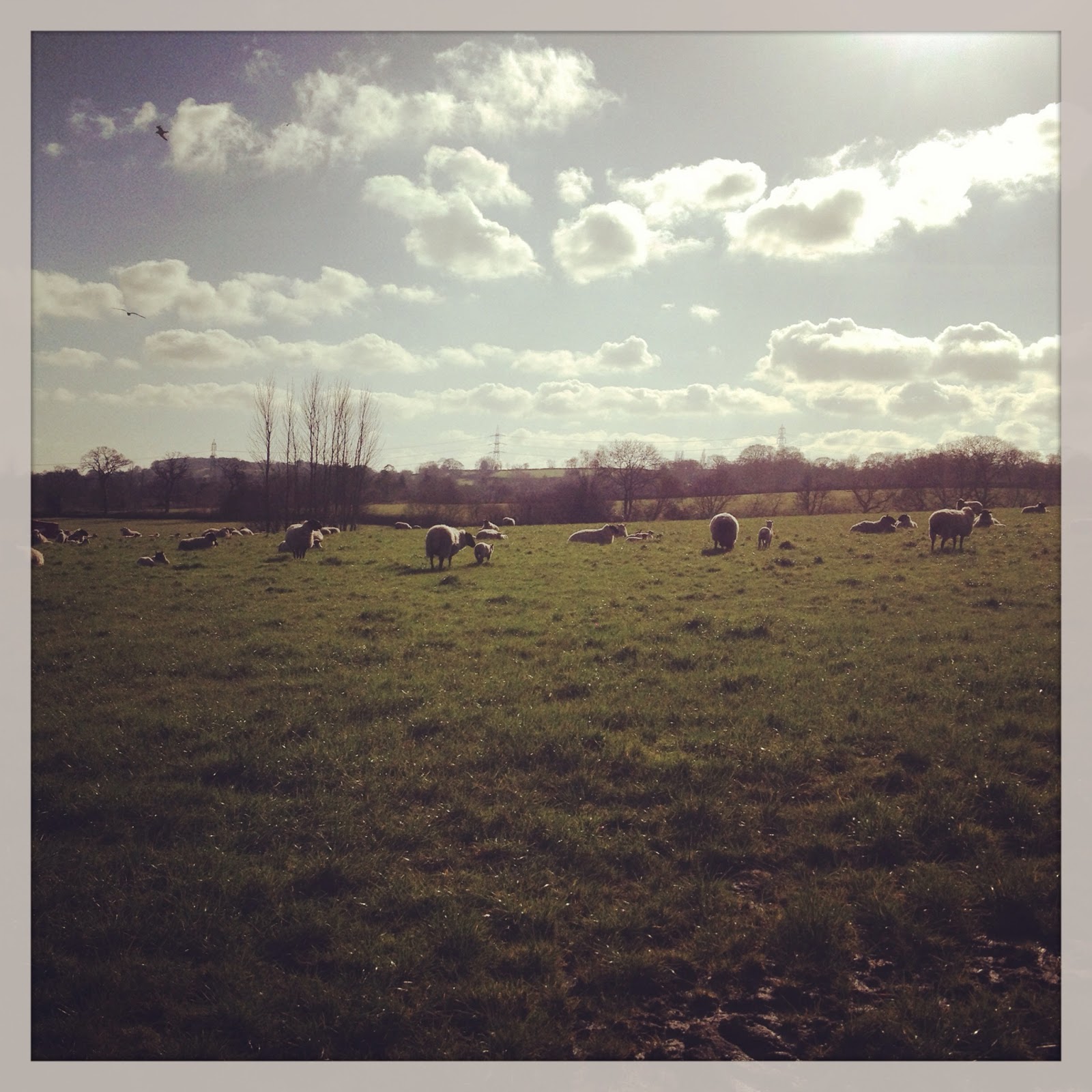
How can I be afraid to fail? There are lambs in the world, for goodness sake.


I bloody hope that all the silly failures above don't happen, but what are they compared with, say, losing someone you love? Making the right decisions for a terminally ill child? Battling cancer? At the end of the day, those are all things that are too sad and too deep for the word failure to be anywhere near them. Failure can be turned to success, or at least to a new chance and a learning experience. Painful, gut wrenchingly awful circumstances cannot be anything but lived through. Yes, lets be open and honest about our petty day to day failures, our fears and troubles. Let's celebrate them, share them, laugh at them. It takes the fear away. Most of all, I will try to remember that these little failures will pass and that I am fortunate to be able to fuss about them at all. Compared to the real tragedies of life, they are nothing.

Everything's going to be alright?